Telematics keep beverage operations moving in and outside warehouse
Telematics arm beverage distributors with data to succeed
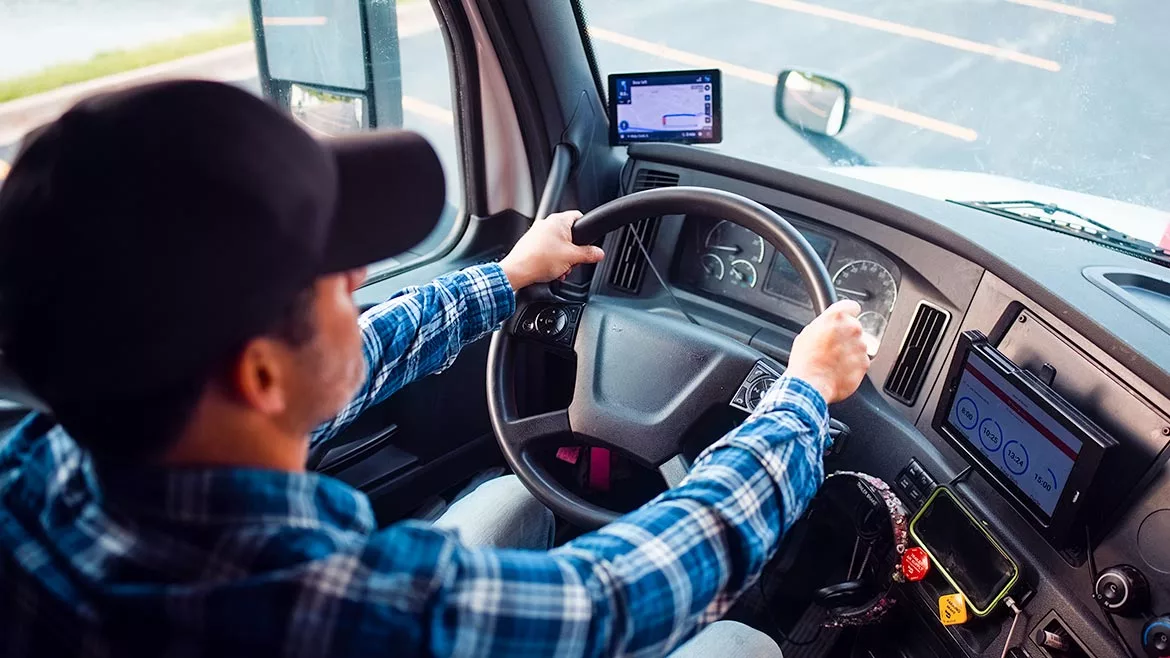
In the classic field day game tug-o-war, the side with not just the most strength but also the players who are connected and in sync traditionally come away victorious. In beverage delivery and warehouse operations, staying connected not only is making operations more efficient, but also safer for its employees.
When it comes to delivery, a representative with San Franscisco-based Samsara explains that the complexity of beverage operations is navigating multiple headwinds at this time.
“Their customers want real-time visibility and tight delivery windows — not just speed, but precision,” a Samsara representative says. “And with driver shortages and rising fuel costs, every mile and every minute has to count. The operators that navigate this well share one thing: real-time visibility across routes, assets, and drivers. When you can see what's happening in real time, you can solve problems before a load gets rejected or a customer calls.”
Lori Olson, manager of strategic accounts at Geotab, Atlanta, explains that there are five key trends within the beverage industry, which are moving operations to being more connected and transparent, while having a safety-oriented approach to delivery.
“Global beverage brands are now moving toward ‘connected everything’ mandates, with strategic directives requiring all assets to be fully connected in a few years’ time,” she says. “This is a top-down requirement driven by sustainability and safety goals, creating a massive wave of telematics expansion across global bottling and distribution networks.”
Olson further details safety as being a primary driver for operations to invest in telematics solutions.
“Leading distributors are organizing their entire technology programs around driver safety and protection,” she says. “A good example of this in action is the way fleet managers with telematics deployed are able to use location-based rules to monitor driver data specifically at delivery points, helping ensure that safety protocols are followed from the moment a vehicle leaves the depot until it returns.”
Olson also highlights that beverage delivery operations are shifting toward video telematics.
“Large-scale delivery fleets are increasingly adopting AI-powered cameras to monitor driver behavior,” she says. “This transition reflects a need for greater visual accountability and risk reduction, allowing managers to act more proactively setting up near real-time alerts in the cabin to help improve the safety of drivers.”
Other trends impacting telematics are the advancements within these programs as they’ve moved beyond tracking tools to be a component of back-office operations.
“Modern distributors are building direct middleware integrations to connect their telematics platforms with ERP and plant maintenance systems (such as SAP),” Olson says. “This allows live vehicle data to trigger automated workflows, such as maintenance scheduling and inventory updates, effectively eliminating manual data entry and helping unify the supply chain.”
The last trends that Olson identifies are the reliance on geofencing and specialized sensors by distributors with repetitive routes.
“Geofences provide automated visibility into dwell times and stop-level compliance,” Olson explains. “To augment this, door sensors are emerging as a critical tool for accountability; they track open and close events tied to specific locations to determine in near real-time whether a door opened on route, validate proof-of-delivery, monitor cold-chain compliance, and provide instant alerts regarding potential product loss or theft.”
However, telematics is not limited to delivery operations. Beverage warehouses are seeing the benefits to arming their warehouse equipment with telematics solutions.
“Within beverage operations, telematics has become a critical link between warehouse execution and delivery performance,” says Michael Bloom, director of connected solutions at Logisnext, Houston. “Forklift telematics gives operations real‑time visibility into how product is moving through the facility — how efficiently trucks are being utilized, where congestion is occurring, and whether equipment availability is supporting outbound delivery schedules.”
Bloom also notes unique demands within beverage warehouses in which telematics can support those needs.
“High SKU counts, fast turns, and tight delivery windows mean warehouse delays ripple directly into missed routes and dissatisfied customers,” he says. “Telematics helps eliminate those blind spots by tying lift truck performance directly to throughput and dock efficiency.”
Bloom adds that a challenge with non‑OEM telematics is that they often are not one‑size‑fits‑all propositions.
“When telematics is embedded by the manufacturer, it’s purpose‑built for the truck and the application, which means the data is richer, more accurate, and far more actionable,” he says. “Instead of just collecting information, operations gain insight into how each truck is truly being used — insight that directly supports better labor allocation, smoother warehouse flow, faster load‑outs, and fewer unplanned interruptions, without leaving valuable insights on the table.”
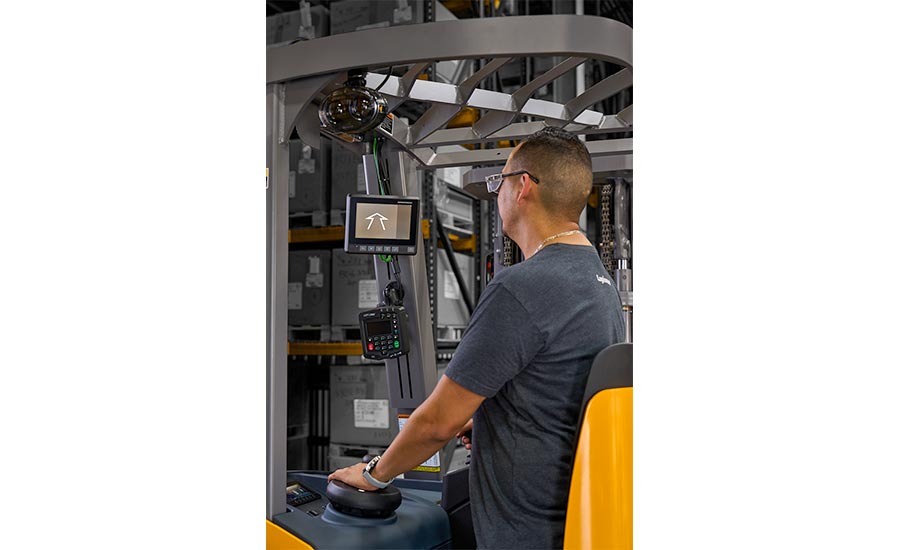
Image courtesy of Logisnext
Kevin McWilliams, director of major accounts at Yale Lift Truck Technologies, Greenville, N.C. also notes the varying challenges that can take place within a beverage warehouse: experienced lift truck operator shortage, rising operating costs, risk of safety incidents, and demand to get product out the door as fast as possible.
“Depending on business goals and operational challenges, there are several different ways that telemetry data can help warehouse managers to adjust their operations,” he says. “For example, if impacts are found to be more common in certain areas, managers can utilize this data to rearrange their facility’s layout and reduce the risk of costly impacts in the problem area. If the data shows that a particular operator is prone to impacts, warehouse managers can arrange for additional training that reinforces proper operating behavior and reduces the likelihood of future impacts.
“And as operating costs continue to rise, lift truck utilization data can help businesses to determine if their fleet is the right size and structured with the appropriate mix of equipment,” McWilliams continues. “In cases where it’s determined that the fleet is too large, operations can structure their fleet more efficiently going forward and protect their bottom line.”
In this period of inflation, McWilliams notes that beverage operations are taking note of these solutions.
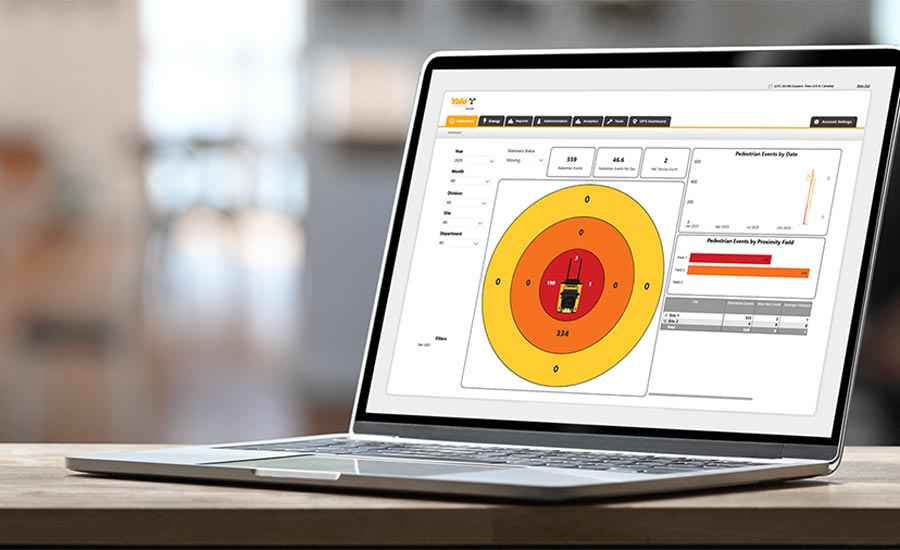
Image courtesy of Yale Lift Truck Technologies
“Thirty-eight percent of operations are using advanced analytics right now, and another 48% is expected to make use of them within the next five years, according to the 2026 MHI Industry Report,” he says. “As such, we’re likely to see more beverage operations take advantage of this data and the insights it offers in the future.”
Equipped for the future
With so many factors impacting the need of telematics solutions for both delivery and warehouses, suppliers are ensuring today’s products deliver what beverage distributors need.
Samsara’s representative notes that the most important development isn't a single feature, but instead platform convergence.
“Many have stitched together separate tools for GPS, video, temperature monitoring, compliance and maintenance,” the spokesperson says. “The best systems bring all of that data into a single platform and use AI to provide real-time insights, which means a much faster path to action.
“For beverage fleets, that means real-time vehicle locations, temperature insights, door activity alerts, and cargo monitoring that provide complete visibility — protecting product quality and maintaining customer trust,” they continue. “Pair that with digital reporting, and you're taking a significant administrative burden off your team.”
Geotab’s Olson notes that the industry’s shift toward video telematics as well as artificial intelligence (AI) capabilities are allowing fleets to move from a reactive to a proactive approach.
“The shift from reactive to proactive is assisted by embedded AI in the devices,” Olson explains. “The data is processed directly on the device that allows for consistent accuracy when detecting critical risks. The accuracy is vital for building driver trust as they will accept the device as a coach rather than a nuisance.
“The AI also allows for efficiency for management as well,” she continues. “AI surfaces the most critical events or repeated behaviors that require attention rather than managers combing through hours of footage. This allows for a more effective and targeted approach to coaching, allowing managers to focus their time maximizing safety improvement.”
Olson explains that high-definition cameras equipped with AI and machine vision allow for on-device processing to detect risky behaviors, such as distracted driving, fatigue, or tailgating, and then issue in-cab voice alerts.
“Beyond simple recording, these systems use both forward and inward facing lenses, unified data and predictive risk detection to provide more depth perception, enabling precise forward-collision warnings and the detection of vulnerable road users like cyclists in a driver’s blind spot,” she says. “For beverage delivery specifically, these cameras are increasingly integrated with specialized exterior sensors, such as door sensors and asset trackers, into a single, unified data stream.”
Jeff Irish, director of operations at Road Ready Telematics, Southfield, Mich., also notes that advanced telematics systems are focusing on partner integrated platforms that combine multiple data sources into a single view.
“Road Ready exemplifies this approach through integrations with best-in-class partners like P.S.I. (Pressure Systems International), a leading provider of tire pressure management systems (TPMS),” he says. “By integrating P.S.I.’s TPMS data into its telematics platform, Road Ready enables real time tire health visibility, proactive maintenance and improved safety — moving telematics beyond basic tracking toward predictive, asset health intelligence.”
Craig Smith, vice president of marketing and communications at Pressure Systems International (P.S.I.), notes that given the importance of tires when it comes to delivery operations, telematics integration can offer a clear picture on real-world operating conditions.
“Continuous tire pressure and temperature monitoring helps detect slow leaks, under inflation, and overheating early,” Smith says. “This proactive visibility reduces the risk of blowouts and unplanned downtime while supporting better fuel efficiency and extending tire life. When tire data is viewed alongside vehicle and route information, fleets can make more informed maintenance and purchasing decisions.
“The inherently frequent stops and urban driving common in beverage distribution are also demanding on brakes and driveline components,” he continues. “TireView TPMS tire pressure and temperature monitoring can help alert fleets to developing issues such as overheating brakes or bearing problems before they result in costly failures.”
Within the warehouse, Logisnext’s Bloom also highlights the integrated platform as a valuable advancement.
“Modern telematics platforms are natively connected, allowing insights to translate directly into action — whether that’s scheduling maintenance, maintaining compliance, adjusting fleet size, or improving operator practices,” he says.
Bloom further notes that the shift from internal combustion to electric lift trucks has assisted in telematics evolving from a monitoring tool to a planning and decision‑making platform.
“Telematics allows operations to conduct data‑driven energy audits by analyzing real duty cycles, run times and load profiles,” he says. “That insight helps determine which applications are truly ready for electrification, what truck models and battery sizes are required, and how existing facility power and charging infrastructure will support the change. By using telematics data upfront, beverage operations can transition to electric with greater confidence — protecting uptime, avoiding over‑ or under‑specification, and aligning energy usage with both operational and facility constraints.”
Yale’s McWilliams points to a recent advancement from the company with its Yale pedestrian event detection dashboard. The new launch is available free of charge to users of the highest tier of Yale Vision telemetry and the Yale pedestrian awareness camera, he notes.
“The camera uses advanced vision technology to track pedestrians who come within 16 feet of the lift truck, at a radius of 110 degrees ― no beacons or badges required,” McWilliams says. “When the camera catches a pedestrian in that field of view, it records the data of the occurrence and adds it to the dashboard within the Yale Vision portal. This allows operations to see details of incidents that have occurred, and to take action to prevent further incidents. So, if one operator is consistently getting near pedestrians, operations can provide remedial training to help adjust that operating behavior.”
Data download
With so much data now at their disposal, beverage operations have the tools to know where to direct their attention.
“The right platform doesn't just collect data — it shows where to focus,” Samsara’s representative says. “Flagging risks, identifying patterns, and pointing teams toward the problems worth solving before they have to go looking. From there, it's about zeroing in on the areas it’s most critical to improve in.”
Geotab’s Olson explains that with so much information businesses can be challenged by that quantity and possible fragmentation.
“When data is pulled from multiple, disconnected sources, it often feels disjointed and difficult to read, which makes it nearly impossible to take meaningful action,” she says. “The most effective operations solve this by using a unified system that brings all data points into a unified view. By centralizing this information, complex data sets are transformed into easily surfaced insights.”
Road Ready’s Irish further notes that it is important for telematics platforms to organize data to support actionable events.
“To improve operations, fleets can centralize telematics data into a single platform where key data points — location, asset health and other alerts — can be easily organized and prioritized,” he says. “Centralization enables tools like geofencing, which helps improve efficiency and security by triggering alerts for unauthorized movement, route deviations or dwell time. By sorting data around actionable events rather than raw data volume, operations teams can respond faster, reduce exceptions, and make more informed, data‑driven decisions.”
Telematics for warehouse equipment also is ensuring that data is easily digestible for operations managers.
“To utilize the data generated by lift truck telemetry solutions, operations must be able to easily access, view and analyze that data,” Yale’s McWilliams says. “The Yale Vision portal makes that possible by presenting it in a series of easy-to-use dashboards that provides users with complete visibility from any internet-enabled device and allows warehouses to easily access the data that’s most important to them. A smartphone app is also available to provide users with insights into their fleet, including automatic impact alerts and pre-shift checklist notifications.
“Additionally, Yale Vision is equipped to provide actionable insights without further data sorting from the customer, removing the guesswork from operations who may not be accustomed to using such data,” he continues. “With its ability to monitor and provide data on equipment diagnostics, and to track preventive maintenance needs based on hours of use, operations are equipped with the knowledge of when service is required.”
Echoing similar sentiments that equipment telematics are not lacking in data, Logisnext’s Bloom says it’s more about highlighting where to focus and offer role-based insights.
“Operators need immediate, clear feedback,” he says. “Supervisors need daily exceptions. Executives need trend analysis and ROI. Telematics platforms must deliver the right insight to the right person at the right time.
“Equally important is turning insight into action,” Bloom continues. “Data only creates value when it drives behavior change. The most effective operations close the loop by using telematics insights to guide maintenance decisions, training initiatives, and process improvements.”
Looking for a reprint of this article?
From high-res PDFs to custom plaques, order your copy today!