FDA revision opens doors for natural color labeling
Expert details impacts beverage labeling will have on supply chain and more
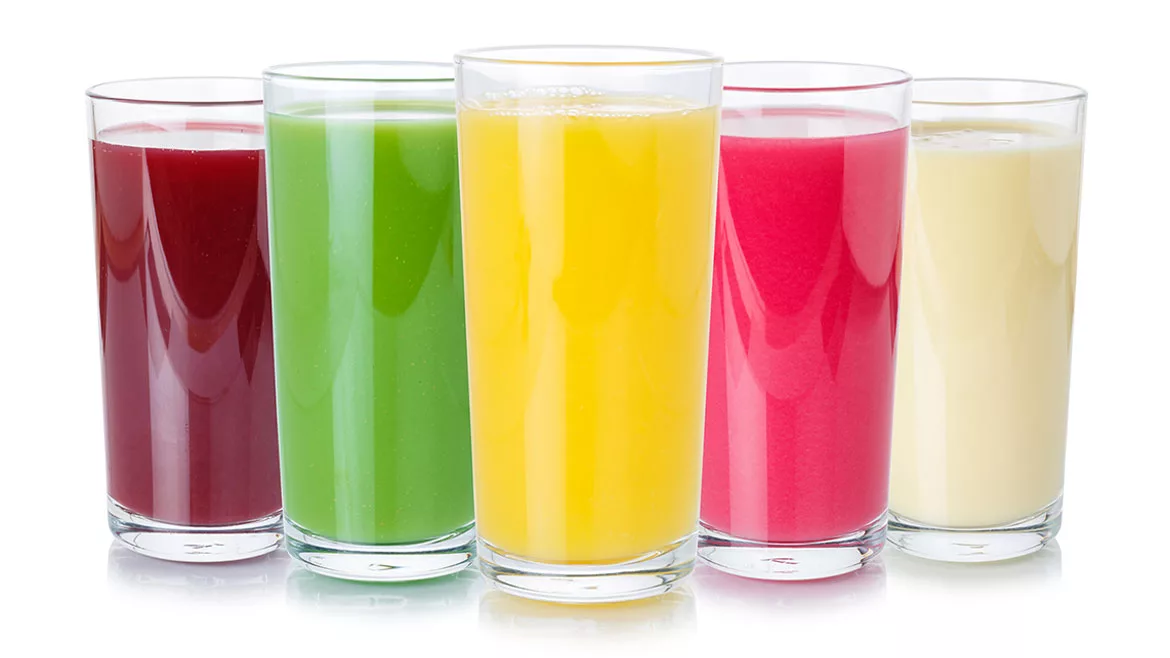
In the 1939 classic film “The Wizard of Oz,” Dorothy and her newfound friends are amazed when they arrive at Emerald City to ride in a carriage drawn by the horse of a different color, which changes colors from moment to moment. Despite the amazement by Dorothy and friends, the concept of bright colors is shifting with consumers when it comes to food and beverage products, and this has prompted response from the Food and Drug Administration (FDA).
In early February, the FDA sent a letter to manufacturers in relation to “no artificial colors” label claims on products. The letter stated: “As part of FDA’s efforts to Make America Healthy Again, the agency has worked with industry to phase out certain FD&C Act certified colors and has fast-tracked the approval of several naturally derived alternative colors. FDA recognizes that the current definition of ‘artificial color,’ which does not distinguish between colors that are derived from natural sources and other color, may create challenges to transitioning away from FD&C Act certified colors.”
In a press release issued the same day as the letter, the FDA says that manufacturers can now claim products contain “no artificial colors” when the products do not contain petroleum-based colors.
Kathleen Sanzo, partner at Morgan Lewis, explains that the revised approach has been viewed as a benefit from an industry perspective, noting that people generally didn’t understand why if the product contained natural colors it was considered artificially colored.
“I think it is actually a welcomed step from the food industry and beverage industry’s perspective,” she says. “And I think it’s going to allow those manufacturers who use natural colors to really market their products for containing those natural ingredients versus some other products that may actually have petroleum-based or other sort of artificial or synthetic colors in them.”
Given this shift, Sanzo expects there will be a rush to secure colors that have recently been approved as well as those that have been approved for years, but for other uses.
In the FDA’s press release, the agency noted it had approved beetroot red, a new color option, and the expanded use of spirulina extract, an existing color additive.
However, with the new labeling guideline, Sanzo cautions that the supply chain for natural colors could experience strain as demand increases.
“I think from a formulation perspective, the cost profile of the product, at least for the short term, is going to drive possibly many of the decisions as to whether or not to switch over to the natural colors, because they will be more expensive, especially in the short term with the demands that will occur in connection with them,” she says. “So, I think the food manufacturer is going to have to make decisions based on availability of the colors.”
Questions manufacturers should ask, Sanzo says, include does it fit the cost profile for the product; and what’s consumer expectation for how that product should look (noting natural colors might not translate the same as synthetic color).
“I think all of those factors are going to drive decisions about how quickly to make formulation changes and if they need to make formulation changes at all,” she says. “I do think there's going to be a premium on being able to claim that it’s not artificially colored.
And so that’s really, I think, going to be a game changer for various product profiles, including the beverage category, because I think there are a lot of colors out there used in beverages, and I think this is going to start creating a little bit of distinction among beverages.”
Sanzo does call attention though that many state laws were developed under the federal Food, Drug, Cosmetics Act, which would still consider products as artificially colored.
“I don't expect that states are going to be interested in enforcing against the labels, but it remains a risk because technically under state law, the product may continue to be ‘misbranded,’” she says. “It also doesn't relieve food manufacturers from potential class actions for false and misleading labeling.”
Harkening back to supply chain concerns, Sanzo notes the importance of securing a reliable supplier early and including in contracts priority status in terms of an economical and supply chain perspective.
“I think there's contractual things that companies, the steps that companies can take to secure their supply chain and ensure that they have a source of these colors,” she says.
Beyond supply chain concerns, Sanzo notes there are additional risks with natural colors, including not having the same certifications that synthetic colors have, as well as consumer activists identifying higher levels of heavy metals, contaminants or pesticides.
“If you’re going to start using natural colors, you’re going to have to put into place from a manufacturing perspective, all of the controls, the test controls that you need to ensure that your color is safe and will continue to perform the way it’s intended to perform,” Sanzo says. “I think those are also some risks that are going to increase, especially if there’s a demand on the marketplace. You know, some of these colors are imported.
“There’s difficulty in having a very secure way to trace the colors, and they’re going to be coming from parts of the world that are not necessarily able to be diligent easily,” she continues. “So, again, just ensuring you’ve got methods and controls, laboratory methods and testing controls in place to ensure that the products are high quality and safe, I think is also a step that manufacturers should be thinking about.”
Before making label and formulation changes, beverage-makers have much to consider.
Looking for a reprint of this article?
From high-res PDFs to custom plaques, order your copy today!