Special Report
2026 Beer Market Report: Hard cider experiences stable year
February 26, 2026
Special Report
2026 Beer Market Report: Hard cider experiences stable year
February 26, 2026
After suffering declines in 2024, hard cider was able to turn its performance around, showcasing modest increases in 2025, experts note.
“In 2025, Cider sales performed well at plus 2%, led by top brand Angry Orchard (plus 3.6%),” says Christal Torres, senior manager II of client insights at Circana, Chicago.
For the 52 weeks ending Dec. 28. 2025, hard cider sales reached $502 million in total U.S. multi-outlets, grocery, drug, mass merchandisers, convenience, military, and select club and dollar retailers, according to Circana data. Of the brands, eight of the Top 10 showcased growth.
Kaleigh Theriault, beverage alcohol thought leader at NielsenIQ (NIQ), Chicago, notes that the market research firm recorded 1.6% sales growth for hard cider in 2025 and draws a connection to the segment’s flavor-forward profile.
“Cider did end up growing,” Theriault says. “It was up 1.6% versus a year ago, and while that growth was relatively small, I think that it's had some impact from the flavor trend that's happening.
“It is a more indulgent offering for some consumers,” she continues. “We’ve also seen light ciders come through where they still get that full flavor, but it’s better for you to position with lower calories, half the calories of a regular cider and maybe lower ABV, too.”
Circana’s Torres also calls attention to hard cider’s flavorful appeal, while pointing to its dietary attributes.
“Some trends driving the increase in hard cider consumption is the demand for flavorful alcoholic beverage options, as well as increasing demand for gluten free options due to dietary restrictions,” she says.
Brian Sudano, CEO at S&D Insights LLC, Norwalk, Conn., also highlights hard cider natural, gluten free and flavor trend attributes that have influenced the market.
Sudano expects these, particularly flavor, will playout in the segment going forward.
“Marketers will continue to pursue new flavor delivery and over time should be able to mask some of the apple flavor and viscosity that hinders consumer adoption,” he says.
NIQ’s Theriault prognosticates that flavor infusions will drive hard cider, such as strawberry cider, citrus cider, berry cider or combinations as cider-makers look to innovate.
Circana’s Torres also anticipates hard cider will see more fruit-forward innovations going forward.
“We are seeing fruit-flavored ciders driving innovation growth in the market, such as flavors like Mango, Raspberry, Blueberry and Orange,” she says.
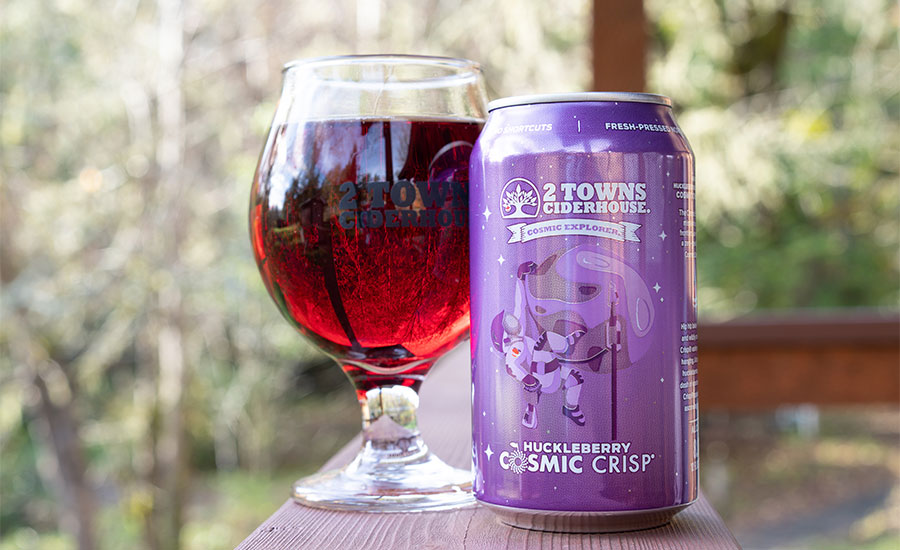
In line with these trends, 2 Towns Ciderhouse released last fall Huckleberry Cosmic Crips Imperial, which layers huckleberries, Pacific Northwest blueberries, and a touch of cranberry over a Cosmic Crisp backbone, the company says.
“This cider is tart, woodsy, and berry-forward with a hint of grip on the finish,” said Dave Takush, head cidermaker at 2 Towns Ciderhouse, in a statement. “The Cosmic Crisp apples pair beautifully with huckleberries and blueberries to build a rich and layered fruit character, while a touch of Oregon grown cranberry ties it all together.”
Not without challenges
Hard cider’s potential for innovation comes as the beer segment is looking to build off of a year of growth and must build off of that by addressing challenges that have hampered it.
“The hard cider segment has been challenged with low innovation in the category, which means that consumers might often choose to opt for a more innovative hard seltzer or flavored malt beverage over cider,” Circana’s Torres says.
S&D Insight’s Sudano notes that hard cider has struggled to gain traction within the United States.
“The country has shifted between a beer and spirit culture versus cider,” he says. “Cider also tends to be higher in calories and is more difficult to mask from a flavor delivery basis hindering flavor proliferation.”
NIQ’s Theriault notes that beyond relevancy, the seasonality association of hard cider with fall and distribution have impacted the segment.
“The other one might be limited shelf space,” she says. “There’s not a whole lot out there from a retail perspective. The shelf space definitely isn't growing for the hard cider section. And I do think that probably some of the health and wellness trends have negatively impacted [hard cider].”
Despite these hurdles, Theriault notes that the beer segment could continue to grow.
“It’s one of those segments that’s always kind of up, kind of down,” Theriault explains. “Like in the past, it’s had some significant declines, but seeing where it finished out the year, I think that it’ll have the ability to keep riding on the coattails of what’s happening across like RTDs and more of that flavor space. And I even think some younger consumers might like it a bit more than some of the traditional beer products, so it could have an opportunity there to continue to grow.”
Noting that hard cider accounts for a small share of the overall beer market, S&D’s Sudano expects that status to remain consistent.
“We expect hard cider to remain around 1% of the size of the beer market with modest declines or growth,” he says.
Circana’s Torres, however, is cautious about continued growth for hard cider’s future.
“Although the cider market shows consistent performance year over year, we do not expect the hard cider segment to grow, as innovation and consumer trends are more aligned with other segments,” she says.
As cider-makers look to build on the end-of-year progress, insights suggest innovation will be the key to that progress.
Return to Main Article