Wine popularity ebbs and flows among generations
Category performance impacted by shifting consumer trends, economic factors
In his song “Sally, When the Wine Runs Out,” ROLE MODEL describes the feeling of a fleeting romance. “Sally, that feeling’s coming around / Please don’t go falling in love / Then disappear when the wine runs out,” he sings in the chorus. Being out of wine is used as a metaphor for when romantic emotions fade.
In the beverage industry, experts note that consumers’ emotions toward the wine category are varying.
Nathan Greene, senior consultant at S&D Insights LLC, Norwalk, Conn., describes how the wine market has performed in the past year and what is contributing to that performance. He says that 2025 remained a difficult period for the wine market in the United States, with both volume and sales declines persisting at an outsized level to any other recent period since 2021. Many of the headwinds expanded their impact recently, Greene notes.
“Total U.S. wine volume declined 3.3% in 2024, accelerating to [greater than] 5% declines in 2025 1H, per S&D’s internal tracking, and is anticipated to have completed 2025 down an estimated 4.75%,” Greene shares. “Contributors to this outcome range widely, but the greatest drag is among value and mainstream table wines, especially imports, which has been exacerbated by tariff activity, much of which, at least on the consumer pull side of market activity, results from an overall reduction in relevance and interest in wine and wine culture by younger American consumers.”
A November 2025 report from Kaleigh Theriault, director of beverage alcohol thought leadership at NielsenIQ (NIQ), Chicago, titled “Sales and Supply in Focus: Key Data and Insights for Year-End Strategy,” notes that total wine sales for on- and off-premise reached $35 billion in the 52 weeks ending on Sept. 6, 2025.
However, total wine sales by channel have declined. In-store sales declined by 5%, while on-premise sales declined by 0.5%. Online wine sales declined by 6.1%, according to NIQ. The report states that premiumization, moderation and economic concerns are all contributing to declines across on- and off-premise channels, for all alcohol segments.
Fluctuating consumption
As S&D’s Greene noted, inflation and tariffs have impacted the wine market. Greene says this influence has been extensive, with nearly 30% of table wine and more than 50% of sparkling wine consumed in the U.S. is historically important, and both had been seeing share gains prior to trade policy impacts in 2025.
“Similar to the macro market headwinds surrounding lower priced/positioned products, those imports expressions have again been hit the hardest, potentially making their value proposition a non-starter at elevated price points and/or reduced margins,” he explains. “Additionally, prior to 2025, imported sparkling wine was the most promising of scaled growth areas for the category overall, leading to outsized macro impacts as sales suffer. Within the market, the impact has been both tariffs themselves and ongoing uncertainty of their scope and length holding back future decision-making/initiatives, especially for European Union (EU) products.”
Although not as pronounced as domestic sales impacts, Greene says the export market for U.S. wine has been affected as well.
In her report, NIQ’s Theriault notes that consumers were feeling more challenged in 2025, considering 72.5% of consumers to be vulnerable consumers as of July 2025.
S&D’s Greene notes that among the different segments of wine, some have performed better than others.
“Super-premium and luxury segments have been able to buck overall market performance in specific industry pockets, especially those products with limited quantities and clearcut differentiation,” he states. “Industry stakeholders have pointed to products selling at about $40 per bottle seeing the strongest performance, and those from desirable terroirs such as Napa, Burgandy, etc. This highlights the consumer divide within the category that has grown in recent years.”
Still, many consumers do not consider wine much or at all in consumption/purchasing behaviors, Greene notes, yet those that do are deeply engrossed in seeking out unique, quality or renowned wines.
NIQ’s report found that domestic wine dollar sales decreased by 5.9%, while import wine sales decreased by 4.6% compared with a year ago. These sales represent non-RTD wines. The report states that red table wine performance was down by 7.4%, while white table wine performance was down by 4%. Rose wine performance was down 9%, with sparkling wine down 3.9%.
Changing preferences
Shifting consumer drinking patterns also are impacting the wine category, experts note.
“Wine is experiencing the brunt of declining U.S. beverage alcohol market both on an absolute and even more pronounced servings/per capita basis,” S&D’s Greene says. “While traditional beer and spirits performance has also suffered, traditional wine’s declines are outsized to its peer categories. The category is often macro viewed as inaccessible due to a high learning curve for consumers.”
Since the pandemic, Greene notes that consumers have consistently viewed the market value proposition to have worsened, especially in the on-premise, where mark-ups relative to retail can exceed 10 times.
“Additionally, the expansion of major wine and spirit distributors/suppliers into competing and growing segments, particularly spirit RTDs [ready-to-drink], lessens overall RTM focus on wine growth, e.g., Gallo with High Noon, SGWS expanding into beer,” Greene adds.
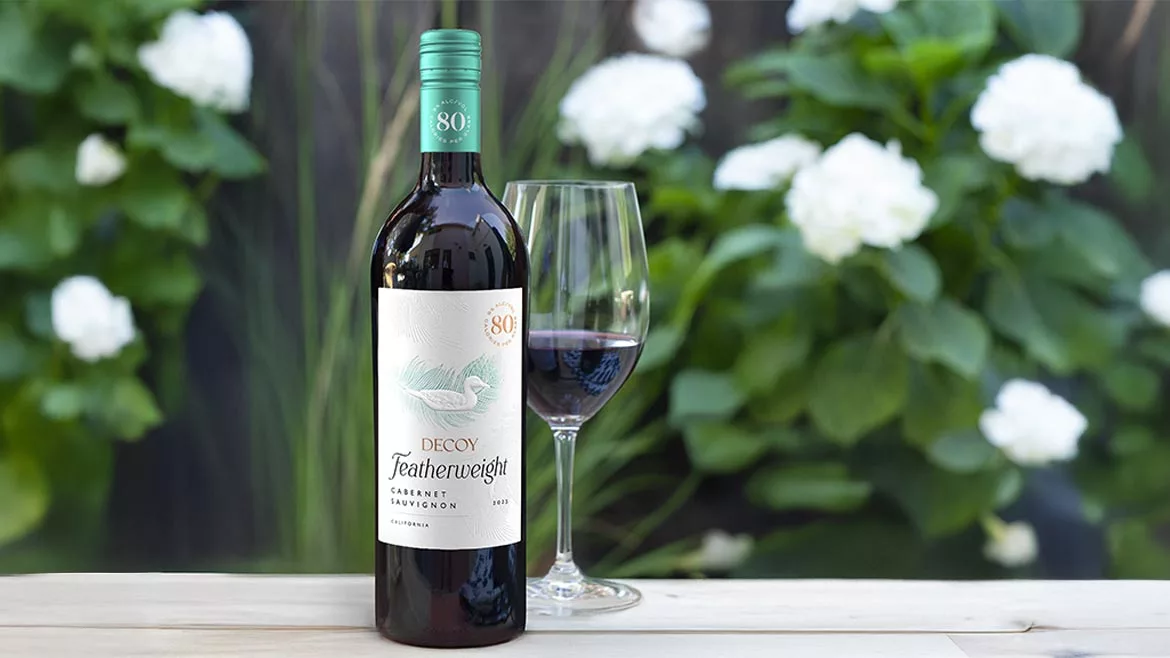
NIQ’s report notes that 79% of the buyers of non-alcohol wine also are purchasing wine that contains alcohol.
Moreover, experts share how younger legal drinking age (LDA) consumers are engaging with the wine market.
S&D’s Greene says that LDA consumers are not engaging with the category much.
“Young consumers seek accessible, yet discerned products without the legacy baggage preceding generations have imbued onto them,” he notes. “The wine industry successfully developed the interested and loyalty of baby boomer and Generation X consumers through travel and lifestyle occasions, wine clubs, gastronomy, etc. Now as millennials are cemented as a core consumer cohort with necessary disposable income, and Generation Z reaches adulthood, these connotations are easily rebelled against, leading to disinterest in wine.”
This is not to say that all younger LDA consumers are not participating in the category in-masse, Greene explains, but instead, they are not to the extent or consistency to offset losses of older generations as they exit and/or reduce their own consumption.
NIQ’s report highlights wine buying households among the different generations. LDA consumers in Generation Z made up just 10% of wine buying households compared with 31% of millennials. Generation X makes up 23% of wine buying households, while 36% of baby boomers are wine buying households.
S&D’s Greene states that the wine category has experienced some positives in the past year.
“As previously referenced, luxury small production expressions continue to buck macro trends, with some sub-segments even experiencing an acceleration of growth, yet not offsetting scaled product/import declines,” he says. “While beginning to appear fleeting in some ways, wine-based RTDs such as BeatBox (recently announced majority stake to be acquired by ABInBev) and BuzzBallz (acquired by Sazerac) have also provided avenues for bulk wine producers.”
However, Greene notes that, in these cases, wine functions more as a means to an end for localized regulatory needs, and these suppliers have transitioned such products to malt-bases in many markets to expand distribution.
“Some wine-forward RTD products have seen market and consumer interest, yet have not broken through in the same ways that FMB [flavored malt beverages] and spirit RTDs have to date,” he adds.
Among varietal expressions, Greene points to prosecco as continuing to lead the wine category — often driven by cocktail inclusions like the Aperol Spritz and replacing Champagne for celebratory occasions.
“Overall white wine growth holds a much stronger outlook compared to red among table wines,” he says. “Finally, lower-ABV [alcohol-by-volume] products (6-9%, generally) continue to see increased consumer demand compared to more traditional 10-15% ABV offerings.”
Although wine’s popularity has not completely “run out” like in ROLE MODEL’s song, it is evident that the category must keep an eye on trends and economic factors to meet consumers’ needs.
Looking for a reprint of this article?
From high-res PDFs to custom plaques, order your copy today!