2025 State of the Beverage Industry: Beer market leans into innovation
Consumer preference changes see flavor, premiumization and non-alcohol as vital for beer’s future
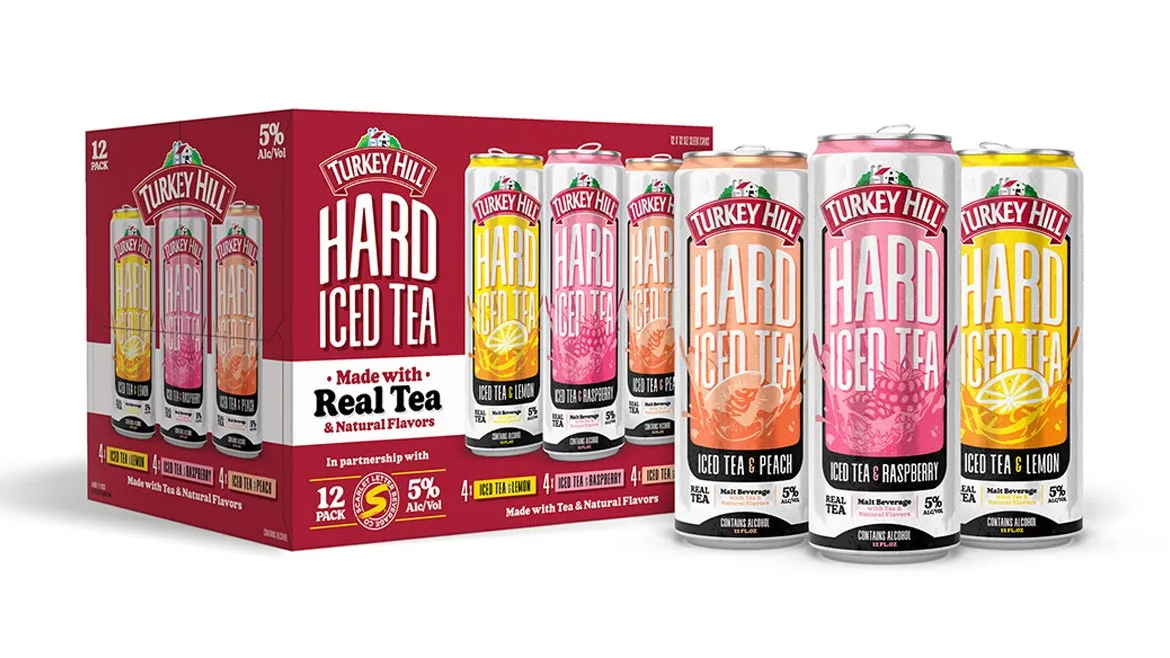
Image courtesy of The Coca-Cola Co.
The beer category comprises a significant portion of the total beverage alcohol (TBA) market. Despite its contributions, the category has seen its share decline in recent years.
“Looking back at 2024, the beer category was down slightly ― -0.6% dollar sales change vs. [year ago] (YA) ― but did not decline as much as total wine, which saw -2.2% dollar sales decline vs. 2023,” said Christal Torres, senior manager of client insights at Chicago-based Circana in Beverage Industry’s March issue. “Spirits were a bright spot in the industry at plus 2.8% dollar sales vs. YA driven by premixed cocktails and seltzers. While the beer category is down 0.1 share of TBA, it still represents a healthy share of TBA.”
Ryan Toenies, senior director of client insights at Circana, noted in Beverage Industry’s March issue that factors impacting beers performance include engaging with the coming-of-age legal drinking age (LDA) consumers as well as competition from the growing ready-to-drink alcohol space.
“With household penetration dropping over time for beer and TBA it will be important for beer to remain relevant with young consumers as they come of legal drinking age,” he said. “Connection with younger consumers is happening with innovation in [flavored malt beverages] (FMB) and [non-alcohol] (NA) beer. The import segment specifically Mexican imports continue to grow and are doing well with younger LDA consumers.”
Based on data from Circana, the overall beer market saw a dollar sales decrease of 1.2%, totaling $45.3 billion, for the 52 weeks ending April 20 in total U.S. multi-outlets. Volume sales decreased at 3.2% during that time.
Among the category’s segments and sub-segments, a few showed dollar and case sales growth:
- Domestic super-premium dollar sales up 3.9%, totaling $4.4 billion, with case sales up 3.9%
- Import dollar sales up 1.6%, totaling nearly $11.4 billion, but case sales down 0.1%
- Flavored malt beverage (FMB) sales up 3%, totaling nearly $4.8 billion, with case sales up 1.4%
- Non-alcohol beer sales up 26.8%, totaling $508.6 million, with case sales up 23.5%
Analysts highlight the positive impact that super-premium beer has had on category.
In a November 2024 insights from IWSR titled “Beer premiumisation trends in the US,” the market research firm notes from January to August 2024 compared with 2023 that premium-and-above beer showed volume declined of 1%, while the super-premium segment grew by 4%.
“Super-premium beer has been growing by high-single digits in the U.S.’s Top 5 beer markets of California, Texas, Florida, New York and Illinois, and is helping to soften some of the declines in Standard beer,” IWSR’s Insights states. “Double-digit growth was seen in many states including Nevada, Indiana, Texas and Maryland.”
Circana’s Torres, further called attention to super-premium’s dollar sales compared with its counter-parts in Beverage Industry’s March issue.
“Domestic super-premiums had strong growth in 2024 at plus 2.1% dollar sales vs. YA,” she said. “Domestic premium and sub-premium segments struggled to gain momentum at -5.5% and -0.4%, respectively.”
Yet, affordability of premium-plus beer appeals to consumers who seek a cheaper alternative to spirits and other drink categories, the IWSR insights says.
“Consumers still get a sense of premiumization while spending less out-of-pocket for a premium beer versus a premium wine or spirit,” stated Marten Lodewijks, president of IWSR’s US Division, in the insights.
Although imported beer’s performance had decelerated, it began the year strong.
In Chicago-based Mintel’s November 2024 report titled “Beer – US,” the market research firm notes the contributions imports have offered.
“Growth in the beer category is challenging, and the future seems less promising,” the report states. “However, imports are a bright spot, experiencing continued growth compared to other segments.”

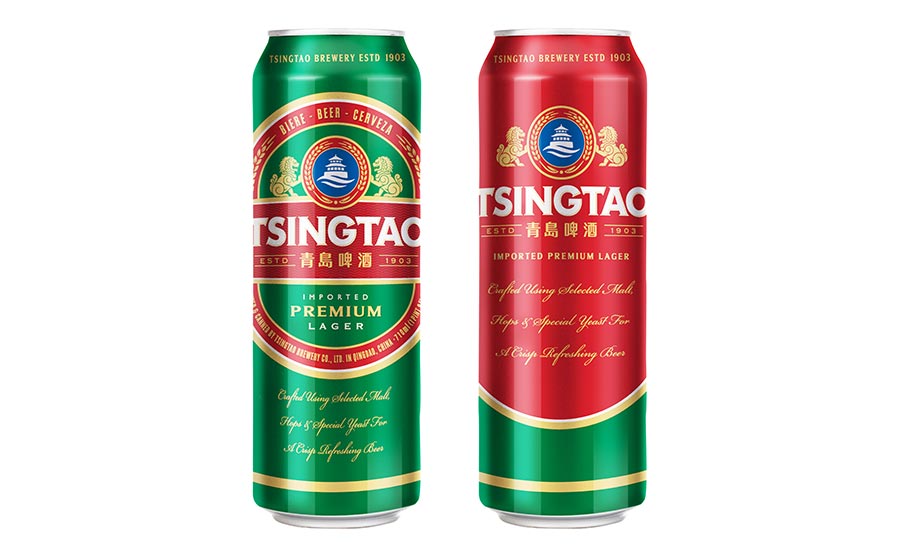
S&D Insights’ Sudano also noted that imported beer’s decade of growth has been led by Mexican imports.
“Imports overall are dominated by Mexican brands,” he explained in Beverage Industry’s March issue. “If Mexican imports continue to grow, imports will continue to grow overall. We expect this to occur.”
Circana’s Torres also pointed to imported beer’s short-term success.
“Imported beer finished the 2024 year strong with a 3.6%-dollar sales increase vs. 2023, but the segment has been on the rise, with a three-year [compound annual growth rate] (CAGR) of plus 7.2%,” she said in Beverage Industry’s March issue, citing total U.S. multi-outlets for the calendar year, ending Dec. 29, 2024.
Further, Torres also called attention to Mexican imported beer’s impact on that performance.
“The success of imports can be attributed to the rising popularity of Mexican Imports, with a three-year CAGR of 7.2%,” she said in Beverage Industry’s March issue. “Brands that contribute to this growth include Modelo Especial, plus $319 million at plus 7.9%-dollar sales vs. [year ago] (YA), Pacifico plus $84.1 million at plus 24% vs. YA, and Modelo Chelada, plus $50.3 million at plus 9.2% vs. YA.”
S&D Insight’s Sudano noted that although Mexican beers have experienced success, current events could limit its future potential.
“Mexican beer continues to grow in the mid- and high-single-digits,” Sudano said in Beverage Industry’s March issue. “Recently it has slowed but is expected to return to grow in this range. However, the potential impact related to deportations and the Southern California wild fires remain unknown. Overall the growth of second and third generation Mexican immigrants along with the Mexican culture crossing over to the general market provides a tailwind to Mexican imports.”
Although Mexican beers are guiding the ship for imported beer’s success, other factors have benefited the category, experts noted.
“More flavorful and high-end market trend favor imports along with [flavored malt beverage] imports such as Chelada style beers,” Sudano said.
The demand for flavorful options also lifted the FMB category.
“A steady rise of FMB indicates that flavor stays an important attribute to consumers for consideration,” Circana’s Torres said in Beverage Industry’s March issue.
S&D Insights’ Sudano echoed similar sentiments.
“Overall, FMBs, excluding hard seltzers, continued to experience strong growth in both dollars and volume in the mid-teens as consumers continue to move toward flavored products,” he explained.
Sudano did note that despite hard seltzers declines, this is an improvement and could be a turn for the market.
“Hard seltzer continues to be the largest segment by a sizeable measure with declines in the segment beginning to moderate from double digits to mid-single digits,” he said. “The segment is positioned to possibly experience growth in 2025.”
Sudano also noted in Beverage Industry’s March issue that The Boston Beer Co., Boston, and Mark Anthony Brands, Chicago, lead the FMB market with hard teas, the second largest segment, and have experienced strong growth. This performance comes as variety is keeping the category relevant for consumers.
“The trend toward easier to drink variety is driving innovation from cocktail blends to flavored teas,” Sudano explained. “When viewed in context of the innovation occurring in spirit RTDs, most of the activity is occurring in tea and cocktail blends.”
Circana’s Torres noted in Beverage Industry’s March issue that the three-year compound annual growth rate (CAGR) for FMBs is 13.6% while beer seltzer centric is 11.8% for its three-year CAGR. “Expect FMB to continue to grow, while we can expect beer seltzer to continue to decline as consumers opt for RTD cocktails and more flavor-forward options,” she said.
S&D Insights’ Sudano also remains bullish on the future of the category.
“FMBs are expected to continue to grow in the mid-single digits lead by tea offerings,” Sudano said in Beverage Industry’s March issue. “While certain brands reaching scale growing strong such as Cayman Jack and Clubtails.
“We expect hard seltzer to continue to improve and finish 2025 flat to down slightly lead by return to growth of White Claw and continued rollout of Happy Dad,” he continued. “When combined with spirit seltzer’s like High Noon, hard seltzers are projected to grow overall in the mid-single range on a dollar basis.”
Another flourishing segment within the beer category has been non-alcohol. Although it’s coming from a much smaller case and dollar sale base, the alcohol-free beer market is offering new opportunities to engage with consumers.
“Moderation driven by consumer well-being goals are driving growth in non-alcoholic beer,” Circana’s Torres said in Beverage Industry’s March issue. “Consumers are aligning their food and beverage choices to well-being goals, including weight loss as one of the top cited goals in a Circana March 2024 survey.
“When asked why consumers are drinking less alcohol in an April 2024 survey by Circana partner CivicScience, respondents most often cited their reason to improve physical health,” she continued. “As glucagon-like peptide-1 (GLP-1) usage is expected to continue to grow for weight control, the beverage alcohol category could see more weight-control-related sales declines as GLP-1 households spend less on the category.”
S&D Insights’ Sudano also called attention to lifestyle choices and diet medications influencing the alcohol-free beer category.
“The movement to reduce alcohol consumption facilitated by lifestyle, diet drugs and anti-alcohol interest groups,” he said in Beverage Industry’s March issue. “This coupled with improved delivery of higher quality NA beer alternatives have driven rapid growth of NA beer.”
Despite the growth and opportunity, non-alcoholic beer still has challenges to face, particularly from other NA versions of traditional beverage alcohol.
“In the short term, NA beer has a lot of runway,” Sudano said. “However, over time NA cocktail offerings and NA wine blends will interact with NA beer similar to [flavored malt beverages] (FMBs) and [ready-to-drink] (RTD) cocktails.”
Additionally, Circana’s Toenies cautioned in Beverage Industry’s March issue that as more brands enter the market, distribution accessibility will be more challenged.
“As entrants continue to come into the space it will become more difficult for brewers to get distribution,” he said. “Currently the segment is a 1.0 dollar share of beer, but a 2.4 share of items in distribution already. The question will be how much space will retailers be willing to give the segment?”
However, S&D Insights’ Sudano compared the U.S. market’s reach to European counterparts and thinks opportunities still exist for the segment to grow.
“Although NA beer has performed well over the past few years, it remains significantly smaller than in Europe,” he said in Beverage Industry’s March issue. “As more brands expand availability along with greater distribution by market leaders, we expect the category to continue growing at double digits in 2025.”
Despite these positive contributions some segments within the beer category are navigating challenges.
Sudano noted that shifts in consumer preferences have impacted craft beer.
“Like the rest of the beer and beverage alcohol market in the U.S., craft is being harmed by shifting consumer behaviors and attitudes,” he said in Beverage Industry’s March issue. “Craft is now entrenched as a market mainstay, yet it no longer has the luster of newness and excitement that drove much of the market performance a decade ago.”
Because of these shifts, the craft beer market is embracing innovation across a range of ways.
“Craft market Innovation is often coming from outside the liquid itself in the traditional sense,” Sudano said. “Sustainability has become a major focus in some markets, surrounding packaging, ingredients, community investment, etc.
“Taproom events and activities continue to redefine the community space that these operators offer,” he continued. “Collaborations with other CPG brands/segments and/or other local businesses have also driven activity. Many craft operations have been exploring the THC and Delta-9 Beverage space recently.”
Despite interest in new styles, IPAs still dominate the craft beer segment.
“IPAs, plus 2.8% [in] dollar sales vs. YA, are contributing the most growth to the craft segment, driven primarily by New Belgium Voodoo Ranger,” Torres said Beverage Industry’s March issue.
Meanwhile, S&D Insights’ Sudano also called attention to IPAs dominance, but notes that variations to the style have stalled as consumers show an interest to a more traditional format.
“IPA remains the lion’s share of volume and activity within the craft market, however, it has not seen the continued rapid innovation that brought Hazy IPAs, etc., to the mainstream just before the pandemic,” he said. “Recent trends have shown a greater focus on throwback/traditional IPAs, often utilizing a ‘West Coast’ designation. Craft lager continues to drive a portion of the activity in the market as well.”
The hard cider category also has experienced challenges.
“In 2024, hard cider was down -1.8% dollar sales vs. [year ago] (YA) and the three year [compound annual growth rate] (CAGR) for the segment is steadily declining at -1%,” Circana’s Torres said in Beverage Industry’s March issue, citing total U.S. multi-outlets for the calendar year, ending Dec. 29, 2024.
Experts also noted that hard cider has been challenged by its distribution footprint.
“The category remains niche and has had challenges gaining distribution in mainstream off premise accounts, especially convenience stores and tap handles at bars and restaurants,” S&D Insights’ Sudano said in Beverage Industry’s March issue.
Circana’s Toenies echoed similar sentiments.
“Similar to other segments with soft trends, cider struggles to keep distribution/space at retail,” he said in Beverage Industry’s March issue.
Meanwhile, the innovation coming from other beverage alcohol sectors could hamper hard cider’s opportunity for growth.
“Expect the hard cider segment to continue slight decline in the coming year as consumer excitement and innovation for the category is focused in other segments,” Toenies said.
Looking for a reprint of this article?
From high-res PDFs to custom plaques, order your copy today!