Beverage Industry logo
search
cart
facebook twitter linkedin youtube
  • Sign In
  • Create Account
  • Sign Out
  • My Account
Beverage Industry logo
  • NEWS
    • R&D News
    • Supplier News
  • PRODUCTS
    • New Products
    • Reader's Choice Poll
  • CATEGORIES
    • Alternative Drinks
    • Beer
    • Bottled Water
    • Cannabis Beverages
    • Carbonated Soft Drinks
    • Energy Drinks & Shots
    • Juice & Juice Drinks
    • Plant-Based Beverages
    • Sports Drinks
    • Tea and Coffee
    • Wine & Spirits
  • R&D
    • Beverage R&D Features
    • Ingredient Spotlight
  • PACKAGING
    • New Packages
    • Packaging Equipment
    • Packaging Material
  • OPERATIONS
    • Distribution
    • Plant Focus
  • TOP LISTS
    • Beer Market Report
    • Executive of the Year
    • State of the Beverage Industry
    • Top 100 Beverage Companies
    • Truck Report
    • Wholesaler of the Year
  • MEDIA
    • eBooks
    • Podcast
    • Polls
    • Videos
    • Webinars
  • DIRECTORIES
    • Annual Manual
    • Contract Packaging Guide
    • Take a Tour
  • MORE
    • Classifieds
    • Channel Strategies
    • Newsletters
    • Events
      • Membrane Technology Forum
    • Interactive Product Spotlights
    • Market Insights
    • Sponsor Insights
    • Store
    • White Papers
  • EMAG
    • eMagazine
    • Archived Issues
    • Advertise
  • SIGN UP!
Plant Focus

Lubricants help operations meet sustainability goals

Food grade lubricants help optimize beverage-processing machinery

By Lauren Sabetta, Managing Editor
Lubricants

Image courtesy of Getty Images

November 27, 2023

The phrase “quality over quantity” expresses the idea that it’s better to have a few things of high value or standard than many things of low quality or worth. This concept can apply to both tangible and intangible things such as products and relationships.

For instance, within the beverage industry, experts note that using high-quality lubricants in beverage-processing machinery not only enables manufacturers to ensure product safety, but also can help companies in achieving sustainability goals.

“Sustainability is making lubricant manufacturers develop more effective and long-range performing H1/food grade lubricants.”

— Jim Girard, executive vice president and chief marketing officer at Lubriplate Lubricants Co.

Jim Girard, executive vice president and chief marketing officer at Newark, N.J.-based Lubriplate Lubricants Co., notes that, as product safety is the top priority for beverage manufacturers, H1/food grade lubricants play a major role.

“H1/food grade lubricants are required for lubrication of beverage processing machinery, for example seamer/closing machines,” Girard says. “Also, the actual manufacturing facility should be ISO-21469 certified. Lubricants manufacturers must continue [research and development] (R&D) to develop more H1/food grade products for incidental contact.”

Yet, as lubricant manufacturers continue to develop products that further meet safety requirements, Girard points out that “sustainability is making lubricant manufacturers develop more effective and long-range performing H1/food grade lubricants.”

Klüber Lubrication, Munich, Germany, in a recent whitepaper titled, “Sustainability and food safety,” highlights how food and beverage producers are using special lubricants to achieve their sustainability goals.

“One contribution to the sustainability goals of food and beverage processing companies, that is often underestimated, is that of high-quality specialty lubricants — particularly those that are provided together with individual consulting services,” the report states. “These lubricants can be particularly instrumental in substantially optimizing production factors like waste reduction, energy efficiency, water consumption and workplace safety.

“For years, the global food industry has been seeing rising demand for products that are manufactured under considerations of resource conservation and the safety of employees and consumers,” the report continues. 

Further, as sustainability now plays an important role in consumers’ everyday buying decisions, the report points to sustainability issues as having morphed into a key competitive factor for food and beverage companies.

“This trend poses a risk to companies: the threat of a detrimental impact on their image if they choose to ignore these issues,” it states. “Small solution with big sustainable effect — specialty lubricants.”
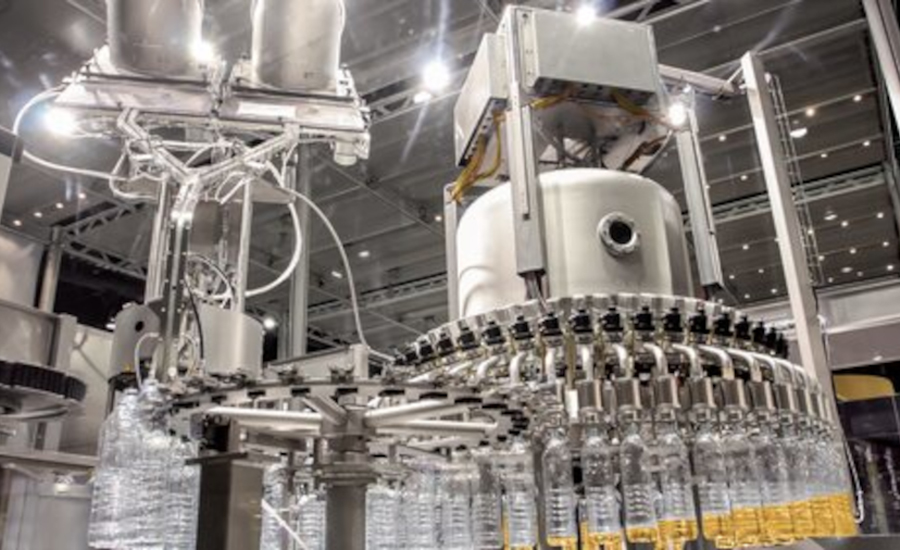

Klueber Beverage
Special lubricants can significantly contribute to waste reduction as they remain at the lubrication point longer, enabling lower overall consumption of lubricants. Image courtesy of Klüber Lubrication


Solutions for the future

Aside from addressing sustainability issues and product safety, experts note that using high-quality lubricants also deliver cost savings and increased efficiency in food and beverage production.

“For instance, thorough examinations of production steps can reveal potential savings in terms of energy, emissions, materials management and control, risk management, waste or water consumption," according to the Klüber report.

Moreover, the report suggests that sustainability and operational goals should go hand in hand with high-quality lubricant solutions, noting that individually tailored service packages can assist food and beverage producers with reaching sustainability goals in various areas:

  • Materials and waste
  • Energy savings and emissions
  • Safety
  • Water

“In each of these areas, sustainable solutions also offer economic benefits,” the report states. “In addition, optimized tribological solutions usually also result in longer uptimes and longer service life of machines, therefore lowering maintenance and operating costs.”

Lubriplate’s Girard stresses the importance of continued technological developments in the formulations of H1/food grade 100% synthetic, long-life lubricants that provide lubrication protection for food- and beverage-processing machinery worth hundreds of thousands of dollars.

In a Lubriplate white paper titled, “The Continuing Evolution of Food Grade Lubricants,” Girard notes that although both petroleum-based and synthetic lubricants “effectively do the job,” synthetic H-1/food-grade lubricants provide significant oxidation resistance versus petroleum-based H-1 food-grade oils.

“[Synthetic lubricants] also provide significantly better cold temperature operating capability. In combination with food-grade additives, PAO-based food-grade H-1 fluids are outstanding lubricants for air compressors, oil recirculating systems, hydraulic systems and gear reducers,” Girard explains in the report. “Their initial high cost is more than justified by their long-range performance.”

Moreover, in highlighting how companies can take full advantage of potential savings, while meeting the requirements for the use of lubricants such as the H-1 registration by the U.S. National Sanitation Foundation (NSF), Girard reiterates the importance of technological advancements.

“The most important aspect in the evolution of food-grade lubricant technology is that H-1/food-grade lubricants can now effectively handle every machinery lubrication application at a food and beverage-processing plant,” Girard says. “This produces lubricant inventory consolidation, is good for the food and beverage-processing plant employees, and — most important — gives added protection to the ultimate consumer.”

KEYWORDS: lubricants product safety sustainability

Share This Story

Looking for a reprint of this article?
From high-res PDFs to custom plaques, order your copy today!


Sabetta lauren

Lauren Sabetta, managing editor for Beverage Industry, writes for the magazine’s print and online components. She earned her Bachelor of Science in Communication, Journalism from Appalachian State University.

Recommended Content

JOIN TODAY
to unlock your recommendations.

Already have an account? Sign In

  • top 100 beverage companies

    Top 100 Beverage Companies of 2024

    For the global beverage market, mergers and acquisitions...
    Sports Drinks
  • Chocolate, Strawberry, Vanilla shakes

    Classic flavors provide reliable, consistent results for beverage-makers

    Classic flavors of chocolate, vanilla and strawberry...
    Ingredient Spotlight
    By: Chloe Alverson
  • Free Spirits Instant Bar Bundle

    Lifestyle trends drive growth for non-alcohol category

    As lifestyle trends continue to drive growth for the...
    Wine & Spirits
    By: Lauren Sabetta
Manage My Account
  • Newsletters
  • Online Registration
  • Subscription Customer Service
  • eMagazine Subscription
  • Manage My Preferences

More Videos

Sponsored Content

Sponsored Content is a special paid section where industry companies provide high quality, objective, non-commercial content around topics of interest to the Beverage Industry audience. All Sponsored Content is supplied by the advertising company and any opinions expressed in this article are those of the author and not necessarily reflect the views of Beverage Industry or its parent company, BNP Media. Interested in participating in our Sponsored Content section? Contact your local rep!

close
  • Woman in Coat
    Sponsored byApplied Food Sciences

    Opportunity for Hormone Support in Functional Beverages

Popular Stories

Pepsi Prebiotic Cola

Pepsi offers limited online release of Prebiotic Cola

Airheads Soda

AIRHEADS enter beverage market

Buffalo Trace Distillery

Buffalo Trace Distillery pays homage to its region’s heritage and history

making connections webinar

Events

April 16, 2025

2025 State of the Industry Series: Alcoholic Beverages

On Demand In Beverage Industry’s annual State of the Industry: The Alcohol Beverage Market, analysts at S&D Insights LLC delve into these trends and how they’re shaping the industry.

View All Submit An Event

Poll

Retail Coffee Segment

What retail coffee segments will fare well into the next year?
View Results Poll Archive

Products

Milk and Dairy Foods Nutrition, Processing and Healthy Aging

Milk and Dairy Foods Nutrition, Processing and Healthy Aging

See More Products

Related Articles

  • Contiform 4th gen

    Plastic bottle manufacturers help beverage operations tackle sustainability goals

    See More
  • Bragg Pineapple Turmeric Apple Cider Vinegar Blend

    Botanical, adaptogens help beverage-makers meet health and wellness goals

    See More
  • Large modern warehouse with forklifts

    Reusable containers help beverage operations support sustainability metrics

    See More

Related Products

See More Products
  • beer.jpg

    The Chemistry of Beer: The Science in the Suds, 2nd Edition

See More Products

Events

View AllSubmit An Event
  • September 9, 2009

    Food Plant of the Future: Building Realistic Sustainability into Food and Beverage Plants

    AVAILABLE ON DEMAND   Using cost-effective design solutions, food and beverage processing facilities can meet the rigorous performance demands required in a processing and production environment and, at the same time, focus on sustainability. 
View AllSubmit An Event
×

Elevate your expertise in the beverage marketplace with unparalleled insights and connections.

Join thousands of beverage professionals today. Shouldn’t you know what they know?

JOIN NOW!
  • RESOURCES
    • Advertise
    • Contact Us
    • Directories
    • Store
    • Want More
  • SIGN UP TODAY
    • Create Account
    • eMagazine
    • Newsletters
    • Customer Service
    • Manage Preferences
  • SERVICES
    • Marketing Services
    • Reprints
    • Market Research
    • List Rental
    • Survey/Respondent Access
  • STAY CONNECTED
    • LinkedIn
    • Facebook
    • YouTube
    • X (Twitter)
  • PRIVACY
    • PRIVACY POLICY
    • TERMS & CONDITIONS
    • DO NOT SELL MY PERSONAL INFORMATION
    • PRIVACY REQUEST
    • ACCESSIBILITY

Copyright ©2025. All Rights Reserved BNP Media.

Design, CMS, Hosting & Web Development :: ePublishing