Exotic fruits connect with consumers’ bold flavor interests
Adventure seekers, natural trends contribute to tropical fruit usage in beverages
When guiding students on writing styles, instructors will often point to how words can mean the same thing, but can be viewed as either positive, neutral or negative connotations. For example, a piece of furniture described as vintage elicits a more positive connotation while the word broken-down signals a negative one.
In beverage formulations, understanding what ingredients deliver a positive theme and perception in the minds of today’s consumers is important for beverage-makers. One arena delivering on that is exotic fruits.
“Exotic fruits conjure a lot of positive connotations for consumers, including the perception of associated vitamins, bright colors, warm weather, sweet and refreshing profiles, and tropical locations,” says Sydney Byrne, marketing manager at Sensient Flavors & Extracts, Hoffman Estates, Ill. “These positive perceptions, along with the favorable flavor aspects, drive demand.”
Jillian Hermanowicz, vice president of marketing and communications at Vibrant Ingredients, Lake Mary, Fla., explains that the company’s trend-mapping work highlights that exotic fruit demand is accelerating across every beverage category.
“What’s most notable is how consistent consumer preferences are between in-home and away-from-home channels,” Hermanowicz says. “When a flavor trend gains traction in foodservice (for example, guava, yuzu, or dragon fruit), we see rapid translation into ready-to-drink products.
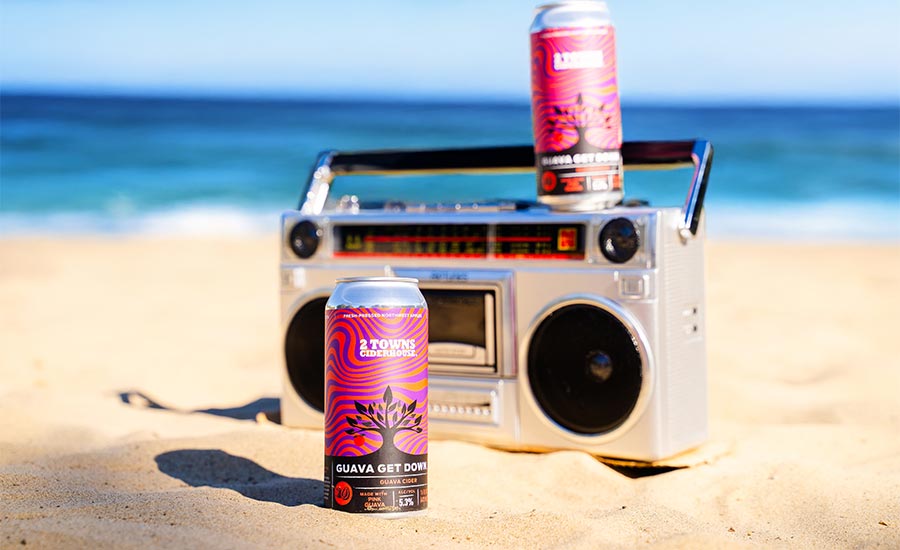 2 Towns Ciderhouse developed Guava Get Down made with fresh‑pressed Northwest apples and pink guava puree.
 Image courtesy of 2 Towns Ciderhouse
“Exotic fruits are no longer niche; they’ve become a core strategy for brands looking to deliver bold flavor and sensorial impact,” she continues. “Our customers are using these fruits to stand out, modernize classic profiles, and offer younger consumers the ‘newstalgic,’ globally inspired experiences they expect.”
Kevin Robb, senior product manager at Monin, Clearwater, Fla., notes that exotic fruits for beverage formulations is seeing an increasing demand as consumers search for beverage experiences that are influenced by flavors and ingredients from around the world.
Robb adds that exotic fruits align with the trends that the company has identified will shape menus this year. One is the trend Whisked Away.
“In todays’ fast-paced world, consumers are turning to food and beverages for a delicious retreat from reality,” he says. “Nostalgia offers grounding and comfort, while global escapism satisfies a yearning for adventure and cultural connection.”
Another trend, The Savory Shift, notes consumers gravitating to “swavory,” sweet and savory, food and beverage innovations.
“Familiar and exotic fruits pair well with hickory smoke, miso, hot honey and toasted notes,” Robb says.
The Mediterranea trend is another highlighted by Monin that aligns with the attributes that exotic fruits deliver.
“The flavors of Southern Europe, North Africa, and the Eastern Mediterranean are driving premium perception of food and beverage menus,” Robb says. “Think basil limoncello spritzes, pistachio rose lattes and saffron pomegranate mocktails, flavors that feel timeless yet trend-forward and adventurous, adding depth and a sense of luxury to familiar formats.”
A representative with iTi Tropicals, Lawrenceville, N.J., explains that exotic fruits allows beverage manufacturers to create product feel exciting and premium, but also hit on health and wellness trends such as lower sugar and clean label.
“Consumers are increasingly prioritizing their health, with a strong focus on immune support, and that shift has had a clear impact on the beverage space,” the representative says. “Exotic fruits are being used more frequently not just for flavor, but for their naturally functional benefits. At the same time, consumers are paying closer attention to sugar especially the difference between added sugars and naturally occurring sugars and are looking for lower-calorie options that still deliver on taste.
“To meet these expectations, beverage manufacturers are turning to exotic fruits that are naturally rich in vitamins, minerals, antioxidants and phytochemicals,” the representative continues. “These ingredients allow brands to increase real fruit content while reducing added sugar and overall calories, resulting in beverages that feel both indulgent and better-for-you.”
Sensient’s Byrne explains that natural flavor trends have benefited exotic fruit flavors.
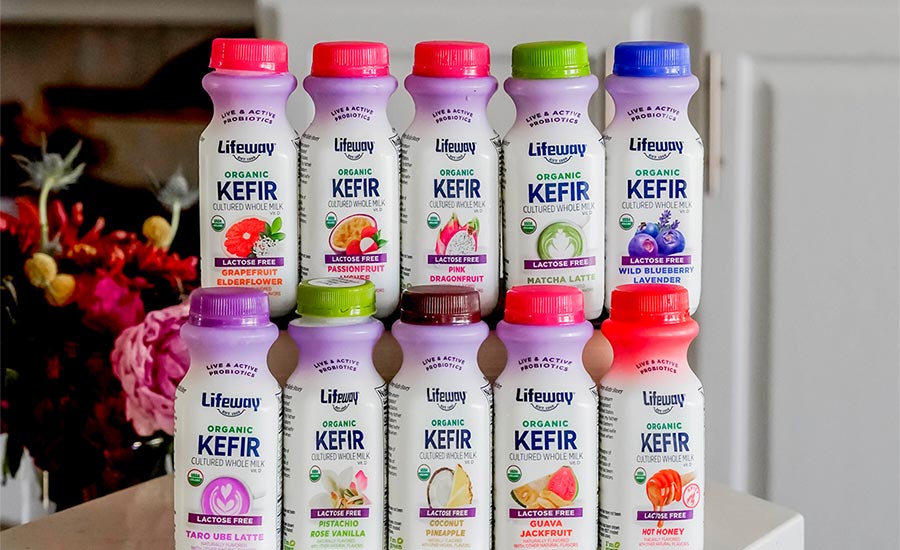 Lifeway Organic Flavor Fusions collection features 10 globally inspired, bold and functional flavor combinations.
 Image courtesy of Lifeway Foods Inc.
“Natural flavors have become table stakes in the modern market,” she says. “It’s simply what people expect now. Over the last decade, we’ve seen natural flavors move from being more common in certain categories to being sought after everywhere as brands strive to be known for having a clean label. This holds true with exotic fruit flavors in beverages.”
Byrne also notes experiential flavor trends tie in perfectly to exotic fruit flavors.
“These flavors bring novelty and excitement, especially when tied to tropical flavors and global flavor trends,” she says. “An example of experiential flavors in the summer would be poolside sparkling water with pineapple and coconut notes that attempt to recreate a vacation relaxation vibe that could take consumers to a different time and place.”
Consumers seeking a sense of adventure also align with exotic fruits, Byrne notes. She adds that beverage is a market where consumers seem more willing to try new flavors.
“There is a low-risk, high-reward scenario with beverages that opens consumers up to trying new products more easily,” Byrne says.
iTi Tropicals’ representative notes that novelty and diversity among consumers has elevated interest in exotic fruits.
“Consumers want something different, but not unfamiliar,” the representative says. “Exotic fruits work well in this space because they bring interest and complexity while still blending easily with well-known flavors.
“Lastly, the growing diversity of the consumer base has increased interest in flavors that feel culturally authentic and nostalgic,” the representative continues. “Tropical fruits often evoke a sense of home or heritage, which makes them especially compelling and inspires beverage makers to incorporate them in ways that feel meaningful rather than trendy.”
Vibrant’s Hermanowicz calls attention to three macro trends that are driving demand for exotic fruits: global flavor discovery, next-gen indulgence, and benefit stacking and functional wellness.
For global flavor discovery, she explains that millennials and Gen Z are exploring global cuisines.
“They want beverages that offer adventure, cultural storytelling, and a sense of discovery,” Hermanowicz says. “Exotic fruits deliver that instantly.”
Hermanowicz adds that next-gen indulgence taps into consumers’ desire for indulgence and better-for-you.
“Exotic fruits provide perceived wholesomeness, allowing brands to create ‘mindful indulgence’ without artificial flavors or enhancers,” she says.
Lastly, the trends of benefit stacking and functional wellness points to an amalgamation of emotional and functional needs such as energy and immunity, hydration and mood, and relaxation and flavor elevation, Hermanowicz explains.
“Fruits like acerola cherries, yuzu, and guava are known for associated nutrient density and wellness perceptions, making them perfect vehicles to reinforce flavor and function,” she says.
Amplifying beverage profiles
With a world of options out there, experts note that some exotic fruits have resonated with consumers more than others.
“Passionfruit remains one of the most widely used because it acts as a natural ‘flavor amplifier’ with universal appeal,” Vibrant’s Hermanowicz says. “Dragon fruit (pitaya) is rapidly gaining momentum, especially in energy drinks and foodservice, thanks to its vibrant color and refreshing profile. Guava is becoming a star ingredient in both smoothies and sparkling beverages, reflecting its growing cross-channel popularity. Mango continues to be the longtime anchor of tropical flavor systems and remains a foundational staple for many brands.
“Lychee is accelerating in cocktails and mocktails as consumers gravitate toward floral, aromatic profiles,” she continues. “Yuzu is now the fastest-growing citrus in North America, prized for its premium, bright, and distinctly modern flavor. And acerola, valued for its association with vitamin C — including our acerola sourced from acerola cherries — is increasingly leveraged for both flavor and perceived functional benefits. What’s especially notable is how these flavors show up simultaneously in grocery, coffee chains, convenience beverages, and frozen dispensed formats, signaling strong cross-channel resonance.”
Sensient’s Byrne explains that although popular exotic fruits within beverage include dragon fruit, passion fruit, guava and prickly pear, she notes that exotic is more of an exotic term as what is considered exotic for one person, might be traditional for another.
“It can be helpful to think about fruit flavors on a scale from familiar, moving through tropical and exotic, all the way to super exotic or unfamiliar,” Byrne says. “In that group, prickly pear and dragon fruit are a little less familiar and still on the rise.
“But what is really beneficial about some of these tropical and exotic flavors is that even though their names and familiarity are more exotic, the flavor profiles are very approachable,” she continues. “The flavors remain close but also slightly nuanced to other fruits in that family. So, it is a flavor that can actually be pretty approachable to consumers, just with some different characteristics to it.”
Given that consumers reward creativity, Byrne notes that beverage manufacturers should look beyond traditional lemon, lime, orange and grapefruit to bolder or more exotic versions.
“Pomelo is the largest fruit in the citrus family and has a flavor similar to grapefruit but often considered sweeter,” Byrne says. “Yuzu has its origins in Japanese cuisine, boasting a blend of lemon, grapefruit and mandarin orange flavors. Native to Australia, finger limes contain little pearls of juice that add both flavor and texture to drinks.
“The nuanced flavor these exotic fruits bring to the market speak to the adventurous spirit of many consumers, especially when paired with a more familiar flavor,” she continues. “Other exotic or tropical fruits gaining popularity include mangosteen, lychee, soursop and rambutan.”
As beverage-makers explore opportunities with exotic fruits, the benefits that these ingredients can offer are highly touted by experts.
“Consumers today are looking for more than just a drink, they want an experience,” Monin’s Robb says. “Exotic fruits like dragon fruit, yuzu and guava deliver that sense of adventure and global connection. These flavors feel fresh and exciting, giving people a way to ‘travel’ through taste without leaving home.”
iTi Tropicals’ representative notes the numerous formulation benefits when working with exotic fruits, including distinctive flavor profiles.
“Passion fruit, for example, delivers a sweet-tart tropical flavor with aromatic top notes that mask off-flavors from nutrient-dense ingredients,” the representative says.
The representative also highlights the vibrant natural colors from fruits like pink guava and red dragon fruit and then nutritional boosts found in solutions like coconut water with its essential electrolytes and acerola’s high vitamin C. Another benefit is the superfood potential.
“Açaí provides antioxidants, omega fats, protein, and fiber, making it a highly desirable ingredient,” the representative says.
Vibrant’s Hermanowicz adds that exotic fruits can deliver sensory and strategic advantages, including “high-impact flavor that elevates even familiar beverage formats; [and] perceived functional benefits, particularly around immunity, hydration and antioxidant association.”
Hermanowicz also notes that exotic fruits offer menu and shelf differentiation by creating beverages that feel modern and global as well as blendability, explaining their ability to pair well with botanicals, teas, cold brew, herbs, heat and florals.
“For brands, exotic fruits are one of the fastest pathways to innovation without needing to overhaul the base product,” she says.
Sensient’s Byrne also points to exotic fruits compatibility with more traditional flavors.
“One of the biggest benefits is that a lot of exotic fruit flavors pair nicely with more familiar flavor profiles, which means that exotic fruit flavors create what we like to call approachable adventure,” she says. “In making this pairing of a new flavor with a traditional one, it makes it feel less risky and more approachable to try, adding newness and excitement without scaring people away.”
Byrne further points to the sensory benefits ― colors, sweetness, etc. ― as well as indulgence associations.
“All in all, exotic fruit flavors create brand differentiation, provide a safe sense of adventure, and imply a more complete and sophisticated sensory experience without excessive sweetness,” she says.
Going forward, Vibrant’s Hermanowicz anticipates that exotic fruits will evolve from trend to territory. This maturation will see premiumization of citrus, such as yuzu, calamansi and blood orange, but also could lead to more hybrid flavor systems.
Additional expectations Hermanowicz notes for exotic fruits are the expansion into coffee and tea, unified consumer experience in foodservice and retail, as well natural-first formulations through clean-label forward innovations.
iTi Tropicals’ representative notes the expansive opportunities for exotic fruits and beverages.
“Key areas of growth include, functional beverages, ingredients like acerola and coconut water will continue gaining traction for their nutritional benefits,” they say. “Low-calorie and low-sugar options, exotic fruits will play a central role in reducing added sugars while enhancing natural sweetness and flavor; and new product formats, expect to see exotic fruits used in creative beverage platforms, including ready-to-drink products, functional shots, and plant-based drinks.”
Sensient’s Byrne notes that exotic fruits are here to stay and expects their popularity will only grow.
“Exotic fruit flavors will remain incredibly relevant in the beverage category,” Byrne says. “This trend isn’t going anywhere. The flavors that are popular now will eventually move through that spectrum of familiarity, making way for new exotic fruit flavors to establish themselves. The trend will continue while the specific flavors within the exotic fruits category change and evolve.”
Looking for a reprint of this article?
From high-res PDFs to custom plaques, order your copy today!