Diverse labor pool, automation help operations close workforce gap
Training, workforce culture can improve employee retention
Samuel Goldwyn Jr., the son of pioneer motion picture mogul Samuel Goldwyn, is quoted for having said, “It was hard for my father to read; it took him a long time, but he had tremendous retention and tremendous appreciation for writing.”
In the realm of warehousing and distribution, where operations are experiencing labor challenges that impact their ability to hire and retain skilled workers, experts note that today’s facility managers are developing a tremendous appreciation for a more diverse labor pool.
“We’re expecting a national labor deficit of 6 million workers by 2032,” says Matt Roush, major account manager at Yale Lift Truck Technologies, Greenville, N.C. “Open roles routinely outnumber available candidates within the traditional labor pool, forcing warehouses to compete aggressively on wages, schedules and benefits while still struggling with turnover.
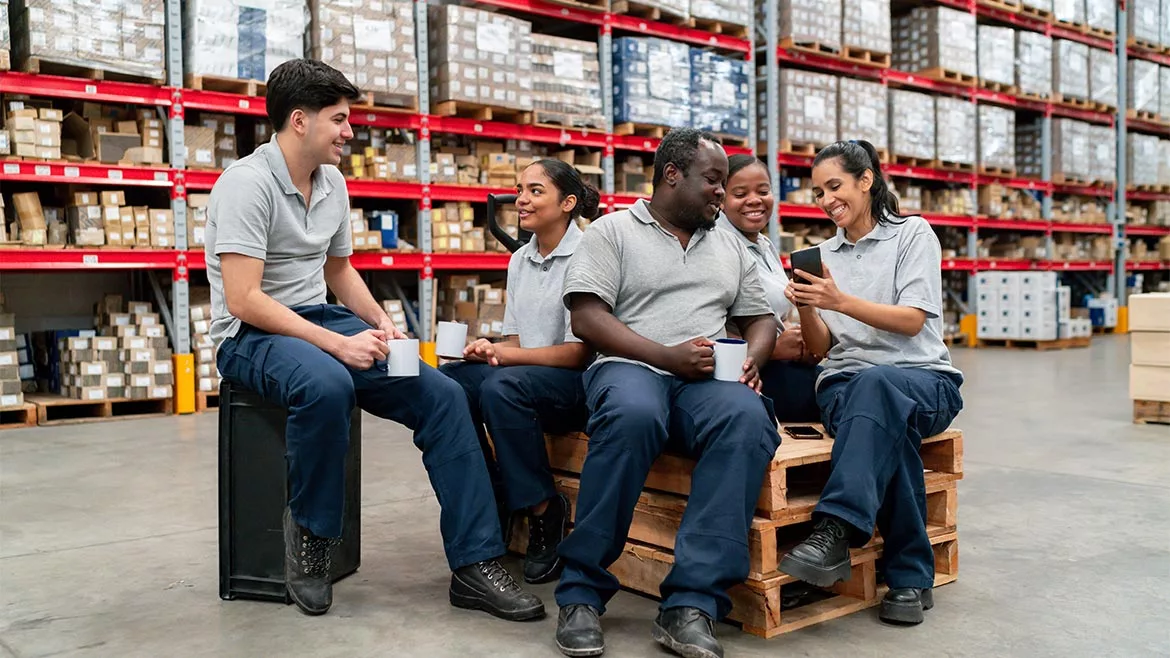
“That’s why forward-looking warehouse operations are recognizing that the labor pool is deeper than it seems,” Roush continues. “Expanding hiring efforts to include underutilized populations — such as people with disabilities, individuals without prior warehouse experience, non-English speakers and part-time or flexible workers — represents a significant opportunity for warehouse operations in the beverage industry and beyond.”
Roush adds that evidence from large-scale distribution environments show that employees with disabilities often deliver equal or even higher productivity, stay in their jobs longer, and demonstrate stronger safety performance than traditional hires.
“Similarly, recruiting workers from adjacent industries like retail, foodservice, construction or delivery can bring transferable skills that align well with the fast-paced, repetitive and physically demanding nature of beverage distribution,” he says. “In addition to making the hiring pool deeper, expanding recruitment beyond traditional labor pools has proven to improve retention.”
Moreover, Roush points out that workers from underutilized populations — particularly individuals with disabilities — often exhibit strong loyalty to employers that provide them with meaningful work opportunities.
“Employees with significant barriers to employment tend to remain with companies longer,” he says. “One multinational beverage company that hired 600 disabled individuals saw a retention rate among those workers of 86% — 14-15% better than that of their employees without disabilities. This kind of loyalty helps stabilize workforces when the labor market is tight and replacing employees is difficult and expensive.”
Roush further notes that employee retention is improved through intentional onboarding, setting clear expectations and supportive management practices.
“New hires acclimate faster and more effectively when warehouses onboard them gradually, provide visual and structured instructions, and offer consistent supervision,” he explains. “Clearly defined tasks, explicit workplace rules, immediate feedback and predictable work patterns reduce confusion and stress, particularly for employees with cognitive or invisible disabilities. These practices actually improve engagement for the entire workforce, contributing to lower turnover overall.”
Roush also points to a strong safety culture in the workplace as supporting employee retention.
“Employees are more likely to keep jobs where they feel safe, supported and understood,” he says. “Adopting safety plans, establishing clear lines of supervision, encouraging a culture of help and accommodating individual communication preferences all contribute to employee confidence and job satisfaction.”
Closing the labor gap
Alongside distributors and warehouses citing a lack of skilled workers as one of their biggest challenges, consumer packaged goods (CPG) companies are facing similar hardships, experts note.
For instance, The Association for Packaging and Processing Technologies (PMMI) noted in a December press release that 95% of CPG companies surveyed said they are struggling to hire skilled operators and technicians.
In fact, according to PMMI’s research report titled “2025 Inside the Workforce Gap,” nearly 60% of CPG companies expect hiring issues to become more demanding in the future, the company notes.
“The CPG firms interviewed said the labor problem is exacerbated by the retirement of experienced staff, high turnover among new hires, and intense competition for technicians, leaving many companies unsure how the labor pool will improve,” said Jorge Izquierdo, vice president of market development at PMMI, in a statement.
Further, according to PMMI, training and knowledge retention are issues that need to be addressed as many CPG companies believe operators consistently learn best by doing, which makes shadowing and hands-on repetition the most relied-on training methods.
“When it comes to training new staff, printed materials and employee shadowing are currently the most widely used methods,” PMMI states. “Currently, digital and embedded tools are underutilized. However, many end users see automation as a solution to workforce challenges and plan to concentrate its use on loading/unloading, inspection, and changeover operations, despite barriers to its implementation, including return on investment (ROI), small plant footprints, and potential downtime due to installation and training.”
PMMI also notes that when researchers asked OEMs how often their customers discuss workforce challenges with them, close to two-thirds said they discuss the topic often or always.
Consequently, OEMs that modernize equipment design and training/support models are best suited to help close workforce gaps, according to PMMI. Additionally, educating end users on underutilized tools and utilizing ROI training can drive stronger adoption of automation, it states.
“But OEMs must do more than that,” PMMI notes. “Currently, end users report that although sophisticated machines are available, they can be difficult to troubleshoot and maintain in real-world conditions. Additionally, operators frequently struggle with complex or customized machines, outdated manuals, and the lack of built-in guidance. In fact, only 14% of CPG respondents rank printed standard operating procedures (SOPs) or manuals as the most effective method for onboarding or upskilling operators.”
PMMI also points to CPG companies requesting more training by video content — signaling an opportunity for OEMs to expand their offerings.
“End users also believe that scalable complements, such as short training videos, human-machine interface step-throughs or picture-driven manuals, could help capture expertise and reduce dependence on undocumented knowledge,” PMMI states. “In addition, to reduce risk and improve training outcomes, companies may need to pair hands-on shadowing with documented, digital formats that make knowledge more consistent and transferable across the workforce.”
PMMI suggests that OEMs can bridge the gap by implementing practical design features and embedded tools that can reduce errors, cut downtime and empower less experienced staff.
“Machine builders also should provide training tools that are clear, consistent and accessible, including multiple languages, picture-driven manuals, short, task-based videos and digital libraries linked to each machine,” it states. “Training could also be improved through skilled trainers and follow-up support after installation.”
Forward-looking solutions
Another area that beverage distribution has noted as having an impact on skilled roles and worker retention is how driver shortages directly affect delivery reliability and operational efficiency.
Yale’s Roush notes that proposed legislation that expands the base of candidates eligible to obtain commercial driver’s licenses (CDLs) such as laws lowering age restrictions, streamlining CDL testing and increasing flexibility in licensing, could have a positive impact on the future of distribution operations.
“One of these reforms involves lowering age restrictions for CDL holders,” he explains. “Under current federal regulations, drivers must be 21 years old to operate commercial vehicles in interstate commerce. Initiatives like the Safe Driver Apprenticeship Pilot (SDAP) and broader legislative proposals aim to allow 18- to 20-year-olds to drive interstate under controlled conditions. These efforts could help address the driver shortage and bring new drivers into the workforce earlier in their careers. For beverage distributors, who often rely on timely deliveries across state lines, expanding eligibility to younger CDL holders could help widen the driver labor pool.”
Another type of CDL reform focuses on streamlining the testing and licensing process itself, Roush notes, making it easier for candidates to obtain credentials by improving access to skills tests across state lines and reducing procedural delays.
“Proposed rule changes from the Federal Motor Carrier Safety Administration (FMCSA) would allow flexibility for CDL applicants to take skills tests in any state, remove waiting period requirements between learner permits and full testing, and ease administrative burdens on licensing agencies,” Roush says. “These changes could shorten the time it takes for new drivers to become fully qualified, helping distribution operations onboard drivers faster and reduce gaps between recruitment and deployment.”
Looking ahead, Roush anticipates that overall, warehouse and distribution operations will see modest improvement in the year to come with employee recruitment and retention.
“Although the warehousing workforce has grown substantially, labor demand continues to outpace supply, and the national labor gap is expected to widen through the next decade. That imbalance means the underlying pressure on recruitment and retention is here to stay for the time being,” he explains. “Between December 2024 and April 2025, more than 320,000 warehouse and light industrial openings were posted. With over 39,000 employers competing for the applicants, the average posting duration for those positions was 29 days. That means the market is continuing to tighten. This is why organizations are refining their approaches and investing more deliberately in workforce strategies.”
As far as worker retention in the short term, Roush notes that recruitment could potentially improve.
“Operations that expand their labor pool and adopt more inclusive, structured, supportive practices will likely experience better retention and lower turnover,” he says. “These approaches take time to scale, but they create more stable workforces in the long run. So, although hiring will probably remain difficult, companies that are willing to invest in broader and more creative talent strategies could be better positioned to retain employees over the next year.”
In the meantime, Roush says that automation and technology adoption in warehouses are likely to grow as companies seek ways to address labor shortages and improve efficiency.
“Automated lift trucks, automated storage and retrieval systems and other material-handling technologies allow operations to stay productive even when workers are at a premium,” he says. “By reducing dependence on manual labor for repetitive tasks, automation not only helps fill staffing gaps but also lets existing employees focus on higher-value work.”
Looking for a reprint of this article?
From high-res PDFs to custom plaques, order your copy today!