2026 Trucks Report: Safety, sustainability and strategic alliances drive innovation
Delivery truck OEMs offer a little something for everyone with new models

If there are two words that sum up what the next year looks like for new OEM products, it would be sustainability and safety. On the sustainability front, there are the obvious zero-emissions, electric vehicle (EV) developments we’ve come to expect from truck manufacturers worldwide, but it also looks like natural gas engines could still be having their moment.
When it comes to safety, we’re seeing a great deal of investment in collision-avoidance and driver-assist systems, as many such systems now are becoming standard offerings on new fleet equipment. And the technology is advancing rapidly, so expect the next-generation updates of OEMs respective proprietary systems, with greater functionality and more bells and whistles.
There’s even a little bit of movement in the autonomous vehicle space, which could accelerate on the heels of some key mergers within the delivery vehicle space.
Here’s a look at what’s on manufacturers’ docket for 2026 and a few years beyond.
Daimler/Freightliner
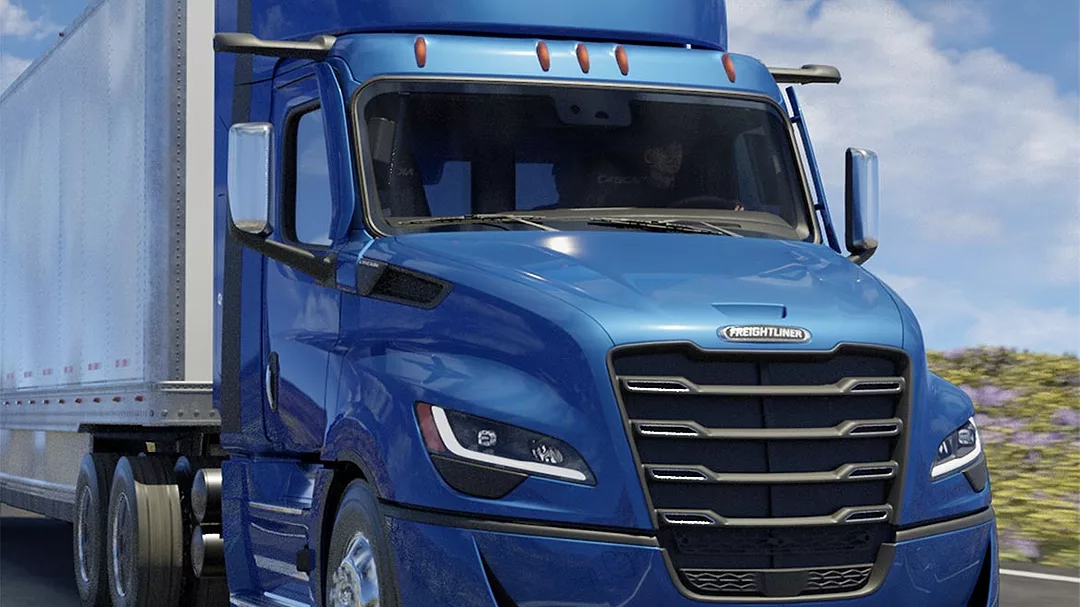
Daimler announced the launch of what it says is the industry’s first 15-liter natural gas engine — the Cummins X15N — in the Fifth Generation Freightliner Cascadia. The offering came less than a year after Cummins began full production of the X15N, marking the first of the Cummins HELM engine platforms. Each HELM platform engine model offered is specifically built and optimized to run on a specific fuel type, such as natural gas, diesel or hydrogen to meet customers’ needs.
Production of the Fifth Generation Freightliner Cascadia, powered by the Cummins X15N, began this past summer. This engine will be available for the 126-inch bumper-to-back-of-cab (BBC) Cascadia in both sleeper and day cab configurations. Additionally, Freightliner is offering optional frame drilling prep configurations for frame-mounted and back-of-cab-mounted compressed natural gas (CNG) fuel tanks to support customer range needs.
The X15N is certified at 50mg NOx and was built specifically as a natural gas engine. The X15N features up to a 10% improvement in fuel economy over Cummins’ 12-liter natural gas engine with similar rating and duty cycle. The X15N delivers the performance, durability, and power required in a variety of heavy duty and vocational applications and is an excellent alternative for fleets looking to significantly reduce their carbon footprint. The engine can be paired with other Cummins powertrain components to deliver optimized features that further improve emissions beyond what the engine can do on its own.
The Fifth Generation Freightliner Cascadia offers the Detroit Assurance Suite of Safety Systems with Active Brake Assist 6 (ABA6), refined aerodynamics, and new business intelligence tools to maximize profitability. ABA6 enhances collision avoidance with automatic braking in more scenarios. Streamlined components like the Max Aero Bumper and redesigned hood reduce drag and improve efficiency.
Freightliner also announced that, beginning with 2026 builds, all Freightliner M2 106 Plus, eM2, and M2 112 Plus models will feature advanced LED headlights as standard equipment.
The new LED headlights feature a daylight-like white light with 6,000K color temperature, similar to natural sunlight. This lighting quality enhances visibility and supports driver awareness of road hazards, signage and pedestrians. There’s also an optional automatic deicing feature that keeps headlights clear in snow, ice or freezing rain, ensuring reliable performance in all conditions without the need for manual intervention.
Made to withstand harsh environmental conditions, the LED headlamp system is engineered for longevity, with a lifespan of up to 30,000 hours. This extended service life, Freightliner says, translates directly into reduced maintenance needs, fewer service interruptions and lower replacement costs over the vehicle’s lifetime. They also are fully compatible with previous M2 Plus series and legacy models, allowing for easy upgrades across existing fleets.
Daimler/Mercedes-Benz Trucks
In other Daimler news, Mercedes-Benz Trucks announced in November that it will expand its driver assistance systems with new functions, beginning in February 2026. Among those is Active Brake Assist 6 Plus, which replaces Active Brake Assist 6. The company notes that the Assist Plus 6 will enable to vehicle to react to critical situations even faster than the previous version, promoting a higher level of accident prevention.
An advanced version of its attention assistant technology, Attention Assist 2, also will be available on trucks starting in February. The system can help prevent accidents by issuing visual and acoustic warnings if the driver’s attention drifts or if the driver is overtired. It uses an integrated infrared camera for visual recognition of head and pupil position, detecting not only the level of fatigue through cues like increasing blinking, yawning, or drooping eyelids, but also the driver’s attention based on the calculated angle of view.
Volvo Trucks North America
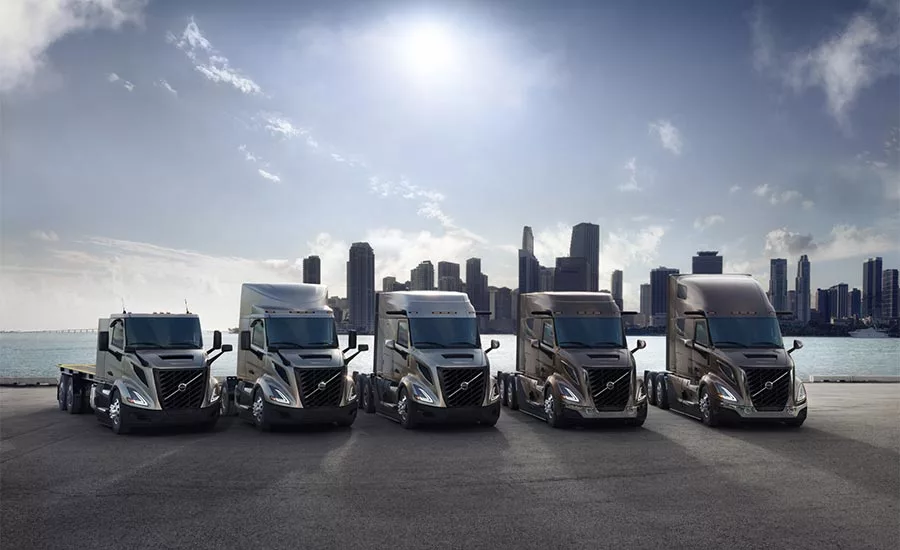
Volvo Trucks North America earlier this year unveiled its all-new VNR line, featuring a 90 percent redesign over the previous generation truck. The new iteration is optimized for shorter-range operations, with a tighter turning radius ideal for navigating urban routes, with the flexibility to handle long-haul operations when necessary.
Advanced safety, connectivity, maneuverability and visibility features further enhance its capability, making it well suited for areas with heavy pedestrian activity. Models include VNR 300, VNR 440, VNR 640, VNR 660, and VNR straight truck. The new VNRs features high-strength steel construction and offers customizable exterior and interior design options, available in two trim levels: Core and Edge.
The Core trim level is ideal for fleets with multiple drivers or applications that require frequent cab entry and exit. The interior door panels, kick panels, and dash are all made of tough molded polymers, making it easy to clean and to hide wear and tear. Exterior trim pieces that could be impacted by high-traffic operations can be repaired and replaced with no painting needed. The Edge trim features chrome accents around the grill and air intake, as well as a new chrome-plated metal bumper designed to handle regional and local deliveries. Other upgrades include a leather-wrapped steering wheel, soft touch dash and armrests.
The new VNR line also incorporates 24-volt electrical architecture that was introduced with the all-new Volvo VNL. The 24-volt architecture allows for faster and more accurate diagnostics, minimizing battery and electrical failures. Its design incorporates lighter components and more reliable, serviceable wiring harnesses, reducing wear and tear due to the lower amperage while ensuring maximum operational efficiency.
As far as safety is concerned the VNR line includes the Volvo Active Safety Platform, which includes Volvo Active Driver Assist (VADA) with forward collision warning, lane departure warning, adaptive cruise control, and automatic emergency braking. Other features include the E-Call emergency response system and integrated cab-mounted side curtain airbags available on both the driver and passenger side.
Optional advanced safety packages (VADA Plus) with Volvo Dynamic Steering (VDS) offer lane-keep support and blind spot monitoring. Using radar on each side of the truck, the system detects when other road users, like pedestrians or cyclists, might be in the truck’s path. The passenger-side system informs the driver via a solid light in the A-pillar or Camera Monitor System and flashes with audible warnings if the turn signal is activated or the vehicle is turning. A driver-side option is also available.
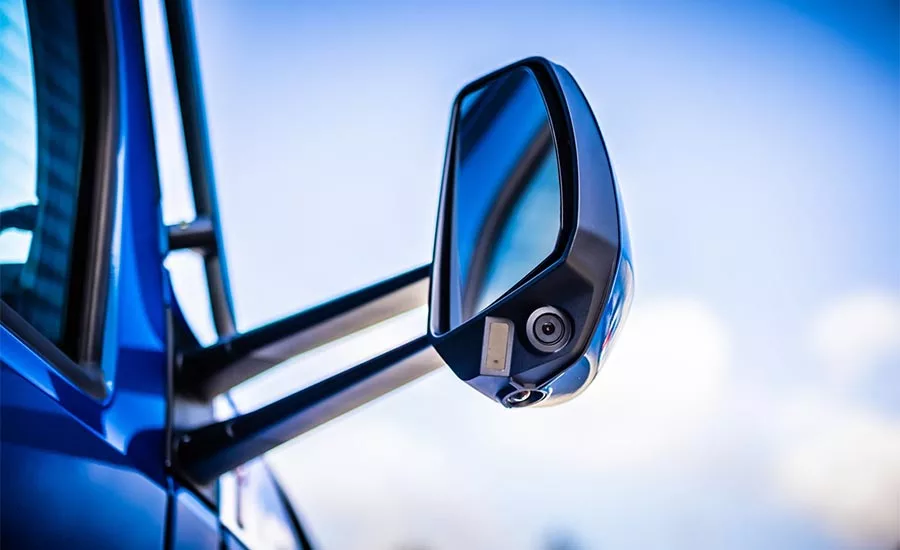
The fully integrated Camera Monitor System allows for smaller, more aerodynamic cab-mounted mirrors versus the large, traditional mirrors. The Camera Monitor System provides superior visibility and supports safe maneuvering for the driver.
Additionally, infrared technology for low-light operation eliminates blinding from headlights of the vehicles behind the truck. Digital reference lines help the driver judge the end of the trailer and the distance to objects behind the truck, while the Auto Pan feature allows the camera to follow the trailer. These advanced safety features support the driver’s ability to make lane changes more safely in congested areas.
The truck series also delivers up to 7.5% improved fuel efficiency compared with the legacy VNR through enhanced aerodynamics, powertrain innovations and idle reduction technologies reducing fuel costs and emissions for fleets. Co-roll technology will disengage the driveline on a downhill grade and let the truck roll for an optimal amount of time to help save energy.
The cab features three levels of seat comfort, with frequently used seat controls repositioned to the right-hand side for easier adjustments. A wraparound dashboard design keeps key controls within reach, minimizing distractions. Steering wheel-mounted controls allow drivers to operate critical functions without taking their hands off the wheel, while optional navigation displayed directly in the Driver Information Display (DID) keeps routing information at eye level.
For drivers operating in colder climates or making frequent stops, Volvo’s new Short Stop parking heater, available in day cab models, keeps the cab warm for up to 30 minutes without idling — reducing fuel consumption and enhancing driver comfort during breaks or while unloading.
The Volvo Connect portal and MyTruck App give fleets comprehensive vehicle data, remote access and precise control over operations. With the MyTruck App, drivers can remotely monitor fluid levels, check lamp status and adjust settings directly from their smartphone, ensuring optimal performance and convenience.
Volvo Connect is a portal where fleets can analyze near-real-time data such as location reporting, route analysis, pending remote programing updates, fuel economy, and driver safety information such as cruise control use, harsh braking incidents and seatbelt use. The vehicles also include an innovative 6x2 lift axle designed to optimize fuel efficiency and performance. Adaptive Loading balances the weight between the axles when the truck is heavily loaded, and at an appropriate point, the non-drive front axle automatically lifts, reducing friction and saving fuel. During lighter hauls, Adaptive Loading improves traction by transferring more weight to the rear axle.
And, powertrain enhancements on the all-new Volvo VNR account for nearly 30% of the fuel efficiency improvement. The next-generation D13 VGT engine features design enhancements to drive greater fuel savings.
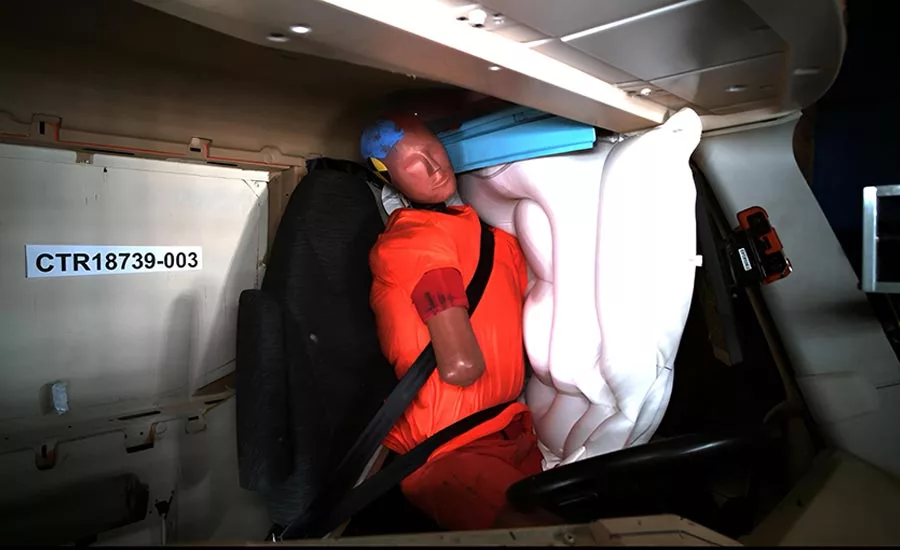
Volvo also announced that integrated side curtain airbags will now be standard equipment on new Volvo truck models built for the North American market. Volvo Trucks introduced the driver front airbag in 1996 with the launch of the VN model and made it standard equipment going forward.
The side curtain airbags are engineered to deploy in a rollover, offering added protection for both the driver and passenger. Rollovers remain among the most severe crash types, accounting for roughly half of all truck occupant fatalities. By making side curtain airbags standard, Volvo Trucks is expanding access to a proven safety innovation that can help reduce injuries and fatalities in these high-impact situations. This added protection will now be standard on every new Volvo VNL and new VNR as part of Volvo’s safety-first approach.
International Motors
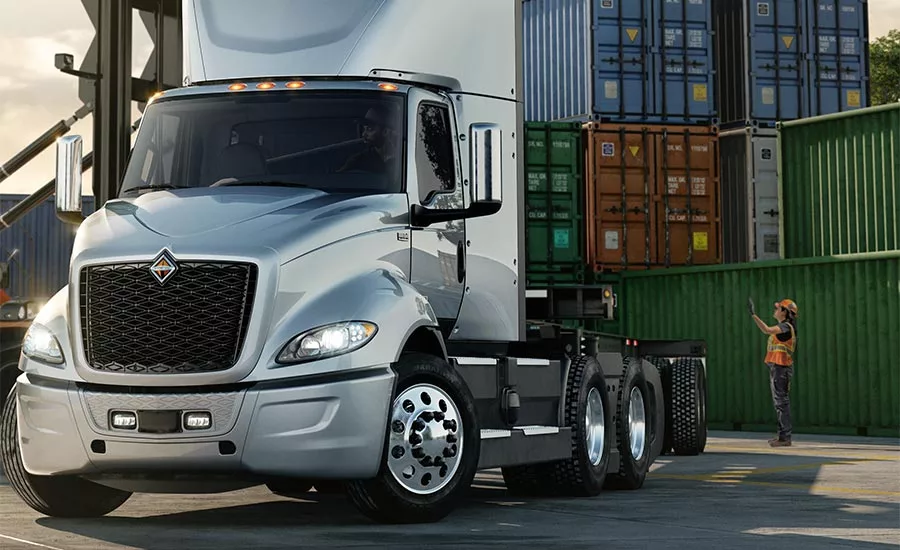
International announced the launch this year of the newest addition to the company's electric vehicle lineup: an all-electric Class 8 International eRH Series.
The eRH Series is available in 4x2 and 6x4 axle configurations, and offers a range of up to 300 miles, depending on configuration, battery capacity and use.
The eRH is optimized for productivity in local and regional applications. It features a 113-inch bumper to back of cab (BBC) measurement for optimized forward visibility, as well as specially designed wheelbases for tight turning radius. These features, combined with the Bendix Fusion integrated driver assistance systems, have been integrated for safer road operations, according to International.
The series comes with lithium nickel manganese cobalt (NMC) battery configuration options ranging from 300 kilowatt hours to 500 kilowatt hours usable battery capacity, providing high energy density in a compact space and profit for the customer.
The tandem and single eAxle configurations reduce the complexity and maximize efficiency of the vehicle drivetrain. The company contends that this results in lower total operating costs while providing peak and continuous power with optimal performance. The eRH offers three levels of driver-selectable regenerative braking, extending range while allowing drivers to best suit their needs.
Additionally, International in October announced that it’s accelerating Level 4 autonomous vehicle development through its partnership with tech companies PlusAI and Nvidia. The truck is being built on Nvidia’s Drive AGX Hyperion infrastructure platform with PlusAI’s SuperDrive AI-based autonomous driving software.
PACCAR/Kenworth
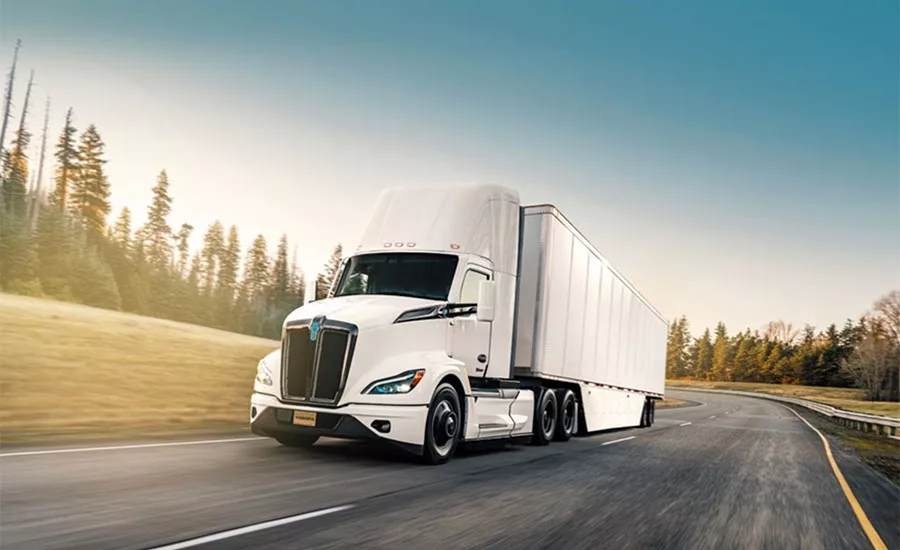
Kenworth recently debuted its next-generation T680E battery electric truck, featuring not only the latest advances in battery-electric technology, but an enhanced exterior design and new in-cab technology.
The updated T680E includes a new PACCAR-integrated ePowertrain system that offers between 365 and 470 horsepower continuous power and up to 605 peak horsepower with 1,850 pound-feet of torque. Three different battery-string configurations are available, the largest of which features a 500 kilowatt-hour battery pack that provides more than 200 miles of driving range. The vehicle uses a CCS1 DC fast charger with a 350 kilowatt-hours peak charge rate, enabling it to charge up to 90% in about two hours.
It features a complete exterior redesign, incorporating aerodynamic refinements and standard LED headlights.
In the cab, there’s an upgraded digital interface that provides drivers with battery-electric-vehicle-specific insights into range, regenerative braking, and performance. Additionally, Kenworth’s new DriverConnect display integrates a 15-inch digital touchscreen to enhance operation of the battery-electric truck. The T680E also is offered with Kenworth advanced driver assistance system (ADAS) packages for customers interested in DigitalVision Mirrors, Bendix Fusion and Lane Keeping Assist.
The Bendix Fusion system offers updated adaptive cruise control, a new pedestrian autonomous emergency braking (PAEB) feature, and high-beam assist, all supported by a forward-directed camera.
In addition to Bendix Fusion, all ADAS packages include tire pressure monitoring, offering real-time information about tire health, alerting drivers to potential issues.
PACCAR/Peterbilt
Another PACCAR brand, Peterbilt, announced the availability of new LED headlights across all of its medium duty vehicles. In addition to greater light output, the new LED headlights provide improved range and increased beam spread, and promise higher efficiency with half the power consumption of traditional halogen lights.
Also, the low-beam head-light glare to oncoming traffic is 28% less than the maximum required limit, Peterbilt notes. The company adds that the high-beam headlights radiate 65% farther than halogen headlights.
The new LED headlights are available on Peterbilt models 548, 537, 536 and 535.
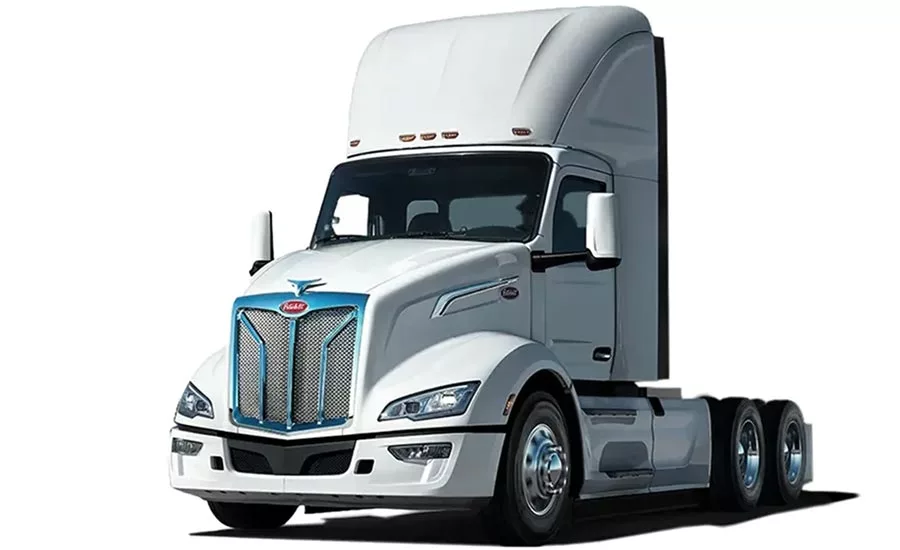
Peterbilt also debuted its next-generation 579EV, building on the diesel-powered model 579. The 579 EV offers three distinct battery capacity options with a maximum range of 200 miles, up to 350kW DC charging, enabling 80% charge in just over 90 minutes; safety enhancements, including a new electronic parking brake (EPB) and standard Bendix Fusion Stop & Auto-Go Advanced.
The exterior design of the 579EV features an exclusive grille with a distinctive pattern and splayed grille bars with blue accents, while the hood features stylish side panels with bright bezels and blue accents. The interior design features laser-etched trim panels and gray stitching on the EV-exclusive Platinum Ionic Gray interior.
Motiv/Workhorse
EV manufacturers Motiv Electric Trucks and Workhorse Group announced in August that they would combine operations to create a formidable medium-duty electric truck OEM, offering a wide range of EV options in Classes 4-6. Once completed, Motiv’s controlling investor will become the majority owner of the company, while Workhorse shareholders would maintain a significant equity stake. The deal is expected to close by the end of 2025.
Workhorse has been showcasing its W56 Class 5 & 6 all-electric step van designed to meet last-mile delivery requirements with up to 150 miles of range and cargo capacities of 1,000 or 1,200 cubic feet. Meanwhile, Motiv’s Class 4 electric box trucks have been on the road for nearly 11 years, with a payload of up to 5,000 pounds and a range up to 115 miles. The company is expected to unveil its Class 6 box trucks at major fleet trade events in 2026.
Mitsubishi Fuso/Hino Motors: Introducing ARCHION
In other M&A news, Mitsubishi Fuso Truck and Bus Corp. and Hino Motors have announced the name of the two merged entities’ holding companies: ARCHION. ARCHION is slated to begin operations April 1, 2026, based on the final terms of the business integration that concluded in June between Mitsubishi Fuso’s majority owner Daimler Truck AG and Hino’s parent company Toyota Motor Corp.
ARCHION plans to draw on the expertise of both companies to enhance the development of hydrogen fuel cell technology. The company also expects to accelerate its progress in the autonomous vehicle realm.
As for the name’s inspiration, the two companies say it’s a bit of a mash-up between two concepts: “arches,” representing the connection between the companies and their stakeholders, as well as to each other; and “eons,” which represents “the future of transportation, connecting to a better life for the next generation.”
Isuzu Commercial Trucks
Isuzu recently broke ground on its new, $280 million, 1 million-square-foot production facility in Piedmont, S.C., which is expected to have a production capacity of 50,000 units by 2030 and will initially produce Isuzu N-Series Gas, N-Series Electric and F-Series Diesel trucks. Initial assembly operations will begin in 2027 and will further expand in 2028. As for specific product news, Isuzu announced that the N-Series Gas, one of the company’s strongest sellers, will be getting a completely new cab design in time for model year 2028.
There also are new updates to the F-Series Diesel, complete with a Cummins B7.2 engine, a redesigned cab and new ADAS safety features.
The company also is exploring the development of a battery-electric F-Series truck, as part of its long-term electrification strategy. Isuzu has been collaborating with Accelera by Cummins — the engine manufacturer’s zero-emissions option — to make F-Series electric a reality.
Looking for a reprint of this article?
From high-res PDFs to custom plaques, order your copy today!