Warehouse software solutions aim to improve safety, efficiency and worker conditions
Rise of eCommerce, SKU proliferation place greater demands on software
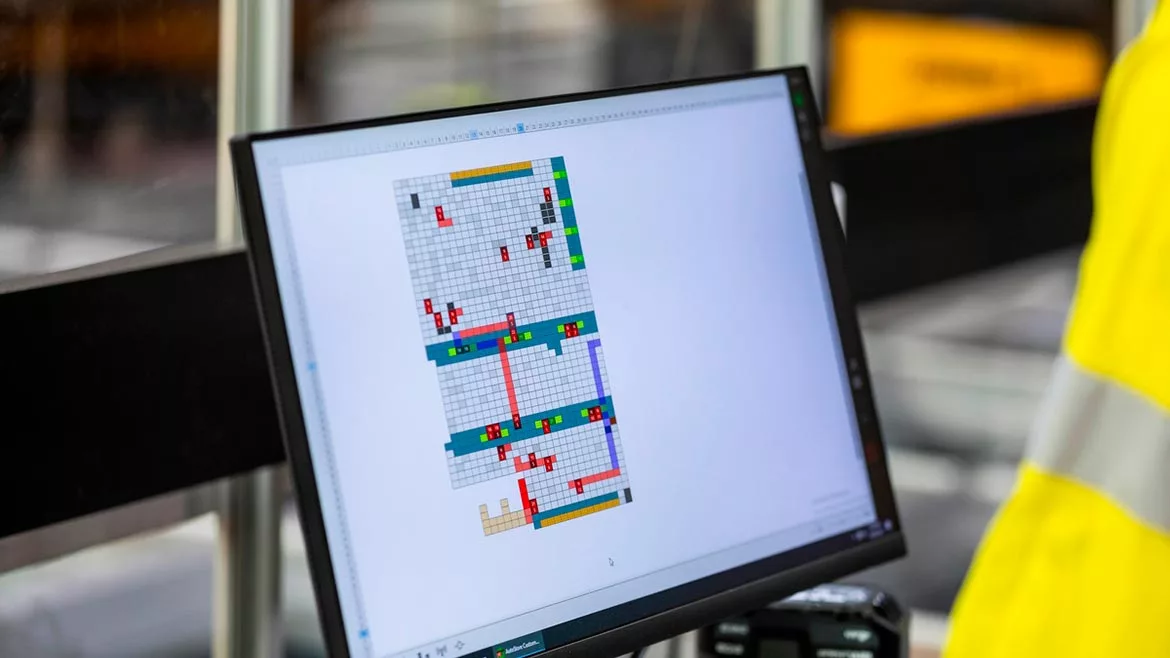
Image courtesy of Dematic
In the Star Wars franchise, there are a plethora of droids. The many droids serve many different purposes. For example, Anakin Skywalker builds C-3PO to help his mother. C-3PO and the astromech droid R2-D2 become an iconic droid duo in the Star Wars universe.
Similar to the way the droids of Star Wars serve unique purposes, the beverage industry continues to grow as consumer preferences evolve, with different drinks offering various benefits. The increase or proliferation of SKUs in the industry has affected warehouse software solutions.
Heyun Xiao, software consulting manager at Dematic, Grand Rapids, Mich., calls the impact significant, as it has increased the complexity of managing inventory.
“As the number of SKUs increases, these systems must accurately track each SKU, with recent demand for batch and lot tracking adding an additional layer of complexity,” Xiao says. “This also affects order picking and fulfillment, where software must optimize processes through advanced algorithms that improve routing and sequencing.”
Xiao adds that with more SKUs to manage, smarter replenishment strategies are necessary. This is especially true as warehouse software now is expected to offer real-time tracking to adjust inventory levels, while ensuring that products are neither out of stock nor expired, and also balancing stock levels to avoid waste, he explains.
“Space utilization is another important factor, with these systems employing advanced slotting algorithms to store inventory efficiently and make it easily accessible,” Xiao says. “Finally, the increase in SKUs results in larger amounts of data, requiring sophisticated data management capabilities. Modern warehouse software leverages big data, [artificial intelligence] (AI) and machine learning to analyze this information, providing real-time dashboards and predictive models that enhance operational decisions and overall efficiency.”
Ernest Bocchino, director of software engineering and integration at DMW&H, Fairfield, N.J., simply says that SKU proliferation affects everything in a warehouse.
“Each additional SKU, independent of volume changes, increases the storage space required, pick face availability and logical tracking through a software solution,” he says. “Depending on the level of software installed, it will affect inventory, waving, palletization, QC, etc.”
All operational changes that need to happen to handle a changing SKU profile must be handled within the software package, Bocchino adds.
Along with SKU proliferation, he says that the biggest drivers for warehouse software solutions are labor efficiency and the desire for better accuracy in delivery.
“Like every sector, the labor market in beverage is changing,” Bocchino shares. “Also, like every sector, any inaccuracy in a system causes rework, which increases costs.”
SKU proliferation requires more robust, scalable and intelligent warehouse software solutions to manage complexity, integrate with automation and provide advanced analytics for effective inventory management and order fulfillment.
Keith Moore, CEO of AutoScheduler.AI, Austin, Texas, states that, the more SKUs a company has, the more data will be handled by warehouse software solutions. As the amount of SKUs increases, Moore says that the software must be scalable to manage the larger volume of data without performance degradation.
“SKU proliferation requires more robust, scalable and intelligent warehouse software solutions to manage complexity, integrate with automation and provide advanced analytics for effective inventory management and order fulfillment,” he adds.
The CEO says that factors such as seasonal and limited-edition beverages requires warehouse systems to quickly adapt to changing product lines and manage short-term inventory effectively.
“The rise in eCommerce and direct-to-consumer (DTC) channels means warehouses must fulfill orders from multiple sources, including online, retail and wholesale,” Moore explains. “Warehouse software must support complex order fulfillment process and real-time inventory visibility across channels.”
Moore adds that consumer expectations for rapid delivery also are driving the need for more efficient warehouse options. To meet tight delivery windows, Moore stresses the importance of software that optimizes picking, packing and shipping processes.
“To support faster delivery, companies are moving toward distributed warehousing models,” he says. “Warehouse software must support decentralized inventory management and coordination across multiple locations.”
Mariah Holcomb, warehouse management product manager at Fort Collins, Colo.-based Encompass, says that there has been a major trend toward integrations that offer automation for specific warehouse processes.
According to Holcomb, the most efficient warehouses with software that supports them are those with a hybrid model. She describes it as using human brain power where it counts and having machines do the heavy lifting.
“Another trend is the shift toward direct-to-consumer (DTC) models,” Holcomb adds. “This increasing demand for more flexible and responsive software, and warehouse systems need to manage multiple order types and provide real-time to both retailers and end customers.”
Dematic’s Xiao points toward the trend of sustainability as well. As more beverage-makers focus on reducing their environmental impact, this leads to change within their packaging and production processes.
“Warehouse software is adapting to optimize load planning and reduce empty miles, which helps cut down on carbon footprints,” Xiao explains. “We’re also seeing increased adoption of automation, especially systems like palletization robots and automated storage and retrieval systems (AS/RS), which are great for handling heavy items like kegs.”
Streamlining with software solutions
There are a multitude of ways for beverage operations to utilize warehouse software solutions in their day-to-day and long-range activities.
“Beverage companies are using WMS to get real-time insights into their inventory levels, improving their ability to fulfill orders quickly and reduce lost sales or overages,” Encompass’ Holcomb says. “Software solutions are increasingly focused on building tools that can help those using the software focus on the work that will have the most impact.”
She says one way this trend can be seen is with automating pick paths and optimizing palletization.
“This reduces manual labor and speeds up fulfillment, particularly for mixed SKU pallets, which are on the rise from SKU proliferation,” Holcomb notes. “Long-term, beverage operations can utilize warehouse software solutions by integrating key warehouse data points into the rest of the business. Forecasting seasonal trends, expansion opportunities and sales targets all have an impact on how a warehouse should be managed in long term planning.”
By keeping the data integrated rather than siloed, Holcomb says that beverage operations are making more intentional business decisions to scale effectively alongside changing market trends.
Dematic’s Xiao says that, for manufacturers, software systems help manage production batches, track raw materials and optimize warehouse space.
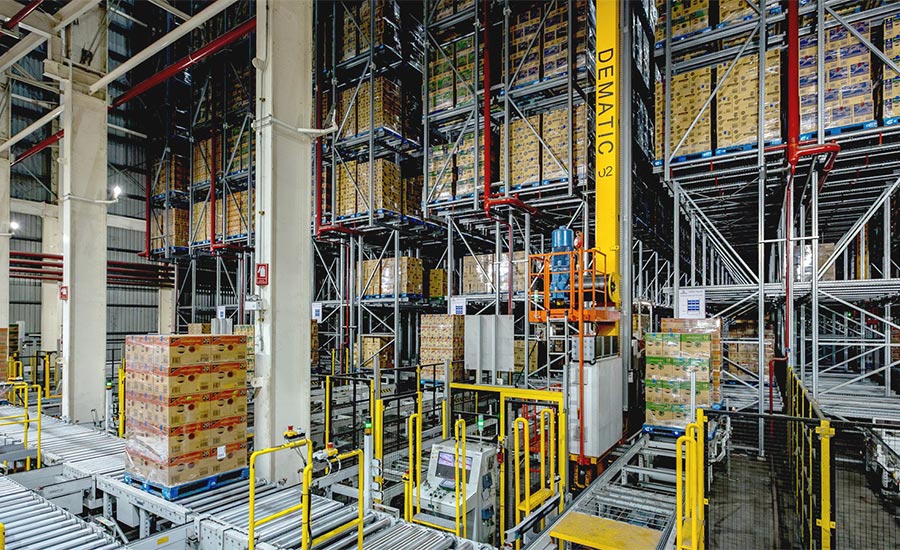
“On the distribution side, route accounting software (RAS) and warehouse software work together to manage real-time inventory, order fulfillment and delivery,” Xiao explains. “Items are arranged in optimal sequence for loading trailers based on delivery routes, which helps boost efficiency and cut costs. Integration with transportation management systems (TMS) further ensures smooth coordination from the warehouse to the final delivery point.”
As for retailers, Xiao notes that warehouse software is essential for tracking omnichannel inventory and handling order fulfillment across various platforms.
“Automated systems for palletizing and loading secure various beverage sizes for safe transport, reducing the risk of damage,” Xiao says. “The software also optimizes trailer loading to maximize space and ensure the stability of the load during transit.”
Working toward improved conditions
Warehouse software solutions also help better the conditions for warehouse personnel.
Encompass’ Holcomb says that such software can automate much of the busy work that managers have to deal with, such as assigning replenishment and counting responsibilities.
“This, in turn, streamlines workflows, reducing the time workers spend walking between aisles, improving task prioritization and ensuring employees are assigned to the right zones based on demand,” she explains. “Modern software solutions are designed with more intuitive interfaces, making them easier to learn and use, which can reduce training times and improve job satisfaction for warehouse personnel. In terms of high turnover, having easily assessable tools that make the work more efficient can have a huge impact on the productivity of the warehouse team.”
Similarly, AutoScheduler.AI’s Moore notes that software systems can automatically assign tasks based on real-time data, which balances workloads and prevents overburdening, therefore reducing worker stress and fatigue.
“With AutoScheduler.AI, if one location has too many workers on shift, it can reallocate the workers to another location where workers are needed or send them home to save on labor costs,” he states. “AutoScheduler creates efficient picking and replenishment routes, minimizing unnecessary movement and physical strain.”
AutoScheduler integrates with other systems to coordinate activities like docking and staging to reduce bottlenecks and wait times, which Moore says leads to smoother operations.
Dematic’s Xiao states that warehouse software solutions are improving working conditions by automating labor-intensive tasks like picking, sorting and palletizing.
“Automation reduces manual labor, lowers injury risk and boosts productivity,” Xiao adds.
The expert also notes that ergonomic interfaces and mobile apps assist in streamlining operations, while hands-free tools like voice-picking help minimize repetitive movements.
“Safety is further enhanced by managing equipment inspections directly within the software,” Xiao says. “Operators scan a barcode to check equipment and complete a safety checklist before use to ensure that faulty equipment is flagged and removed from service.”
Like other experts mentioned, Xiao says that warehouse software solutions improve labor management by assigning tasks based on worker availability and workload.
“These systems provide real-time visibility into warehouse processes, including picking progress, allowing managers to monitor operations efficiently,” Xiao explains. “Additionally, multilingual training models enable non-English-speaking workers to integrate smoothly, ensuring diverse teams can operate cohesively.”
As for what’s next for warehouse software solutions, Ernest Bocchino, director of software engineering and integration at DMW&H, Fairfield, N.J., says that solutions will continue to be differentiators.
“The purpose of software is to enable operations to solve problems they have, or to improve some important metric, such as accuracy or throughput,” he explains. “The landscape is always changing, so the software solutions need to continue to change to support the client’s next set of challenges.”
Heyun Xiao, software consulting manager for Grand Rapids, Mich.-based Dematic, feels that the future of warehouse software solutions within the beverage industry is promising.
“One major development is the integration of IoT (Internet of Things) devices, which monitor storage conditions such as temperature and humidity, both in the warehouse and during transportation,” Xiao explains. “This real-time monitoring helps ensure optimal product quality, preventing spoilage and maintaining regulatory compliance.”
Xiao also notes that artificial intelligence (AI) and machine learning are becoming more prevalent, especially in terms of predicting product demand and optimizing inventory management. Such technologies help to reduce waste and avoid stockouts.
“On the distribution side, AI is optimizing delivery routes, leading to reduced transportation costs and improved overall efficiency,” Xiao says. “Cloud-based software systems are another key advancement. They provide real-time access to data for beverage-makers, distributors and retailers, allowing for greater accessibility and collaboration while enabling faster decision-making from anywhere.”
Blockchain technology is another trend that, while still emerging, Xiao notes is gaining traction.
“It offers enhanced transparency and traceability across the supply chain, making it particularly valuable for quality control and verifying the authenticity of products from raw materials to the consumer,” Xiao adds.
Keith Moore, CEO of AutoScheduler.AI, Austin, Texas, suspects that advanced AI algorithms within warehouse orchestration solutions will enable more accurate demand forecasting, dynamic inventory management and improved efficiencies within fulfillment operations.
“Machine learning models will optimize picking routes and storage layouts based on real-time data and historical trends, improving operational efficiency,” he says.
Mariah Holcomb, warehouse management product manager at Fort Collins, Colo.-based Encompass, also points to AI.
“Like much of the tech industry, the next wave of warehouse software can leverage AI models to help consume more data points and further optimize slotting for pick paths, improve delivery pallet configurations and predict inventory needs,” she says. “More warehouses will adopt robotics to complement their software solutions, so it’s important that warehouse software companies lean into this: be open to integrations and establish structures that make it easy for other applications to plug-in.”
Holcomb notes that advanced analytics leveraged by AI models will allow for beverage companies to make more informed decisions based on historical data, market trends and predictive algorithms to refine inventory management and distribution strategies.
“Environmental impact will likely increase in focus, so software solutions should offer tools that help companies measure and reduce their role in that,” she shares. “Whether through more efficient routing, better packaging choices or processes that move away from using paper, there’s an opportunity to reduce impact that also helps reduce operating costs.”
Thinking through changes
Before updating current software, beverage-makers should consider several factors.
DMW&H’s Bocchino says the biggest consideration is choosing a trusted partner.
“These relationships are usually long in duration and deeply involved in the client’s business operations,” he shares. “A competent and trustworthy solution provider will make transitions to a new system as smooth as possible and be around through the entire relationship to continue to help the client as needed.”
Encompass’ Holcomb notes that beverage-makers should ensure that any warehouse software system smoothly integrates with existing systems.
“The chosen solution should be scalable to accommodate future growth, whether it’s through the addition of new SKUs, expanded warehouse facilities or higher order volumes,” she says. “The ability to customize workflows and adapt to changes in the business or market is essential. Beverage-makers should prioritize solutions that offer flexibility in configuring rules for picking, inventory management and palletization.”
Given the ever-growing complexity in warehouse operations, Holcomb adds that companies should consider a partner that is investing in solving and improving their software systems.
“The industry will continue to change and you want a partner who is going to embrace changes alongside you,” she concludes.
Looking for a reprint of this article?
From high-res PDFs to custom plaques, order your copy today!