Demand for plastic packaging has ebbed and flowed
As consumers prioritize sustainability, plastic beverage packaging adapts
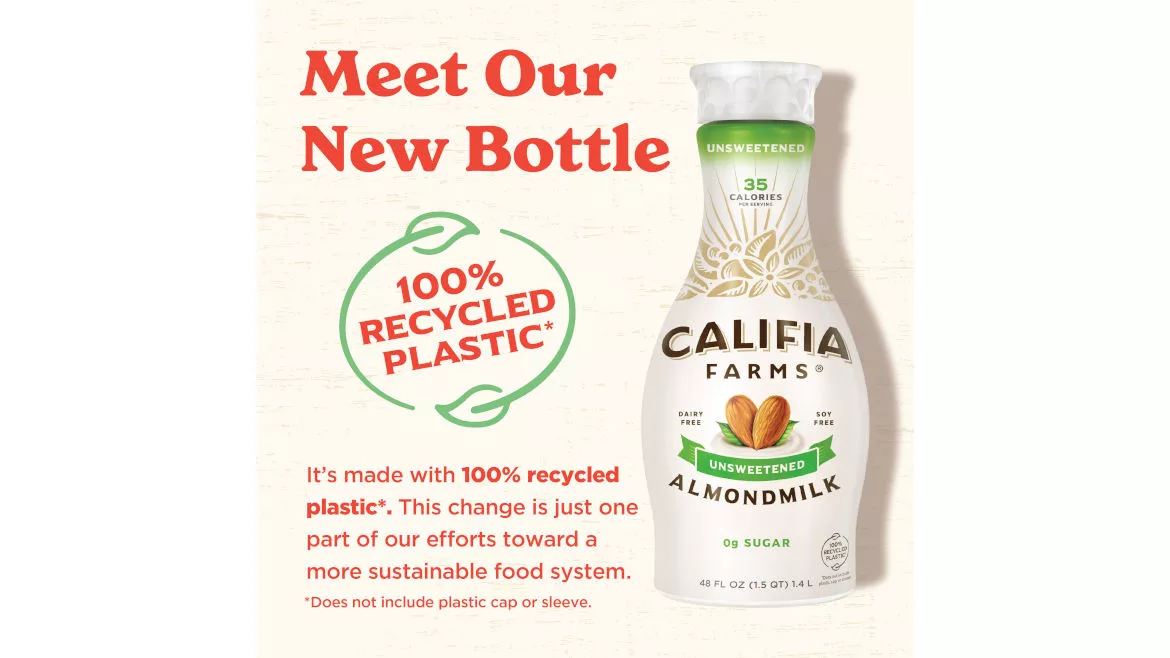
Image courtesy of Califia Farms
In Aqua’s 1997 song “Barbie Girl,” a line in the chorus is “I’m a Barbie girl, in the Barbie world / Life in plastic, it’s fantastic.” In the beverage industry, the demand for plastic bottles is formidable, but as consumer perception of plastic has evolved, suppliers are prioritizing eco-friendly solutions.
“Demand remains strong for plastic bottles within the beverage market despite some of the misconceptions about plastic,” says Jon Zuckerman, vice president of operations at Zuckerman Honickman, King of Prussia, PA. “Plastic remains a sustainable and reliable packaging solution for brands. The global PET bottle market is expected to continue to grow in the coming years.”
Zuckerman suggests that, from a brand perspective, plastic has attributes that drive this performance. He points to design flexibility, durability and eco-friendliness. From a consumer perspective, plastic provides both convenience and transparency.
John Cullen, vice president of PET sales and marketing at Alpek Polyester, Charlotte, NC, describes the demand for plastic bottles over the past few years as “very high,” especially during the COVID-19 pandemic.
“In late 2022 and continuing through today, the industry has seen demand fall as consumer priorities shifted,” he says. “Rising retail prices are one of the most significant factors influencing purchasing behavior. People continue to buy their favorite beverages, they will just buy less.”
How the brands and retailers respond, Cullen says, remains to be seen.
He suspects that consumption habits have driven the performance of plastic bottles within the beverage market. Consumption was high during the pandemic because consumers had limited options outside of the home, so packaged beverage demand was increased.
“As with many goods and services, prices also rose based on cost and availability as supply chains were squeezed,” Cullen explains. “As the U.S. economy re-opened in 2022, consumers resumed some of their previous habits while higher pricing remained in place. The result is that demand for packaged beverages has softened.”
Sustainability goals have affected the use of packaging in the beverage market.
“PET offers brands and retailers a material that is sustainable and can fuel the circular economy in geographies where there is adequate recycling infrastructure,” Cullen says. “Based on public commitments, the brands see PET as a key contributor to meeting their goals. Consumers prefer the look, feel and portability that PET packaging delivers.”
He notes that the industry must continue to improve and build out the collection network so the consumer “can get what they want with recycled content and PET can be recycled for re-use.”
Ann Myers, vice president of sales at Graham Packaging, Lancaster, PA, says that, in recent years, sustainability has taken center stage in the beverage industry. It has driven significant changes in packaging trends, she adds, including the increased use of rPET.
By using rPET, Myers explains that brands are reducing environmental impact, contributing to a circular economy and minimizing plastic waste.
“Brands are also lightweighting their bottles — trimming unnecessary material while maintaining structural integrity — because it reduces greenhouse gas emissions, cuts down on transportation/shipping costs and can reduce overall bottle cost,” she says.
Myers adds that, this lightweighting method also complies with new California regulations that mandate a reduction of virgin plastic in packaging.
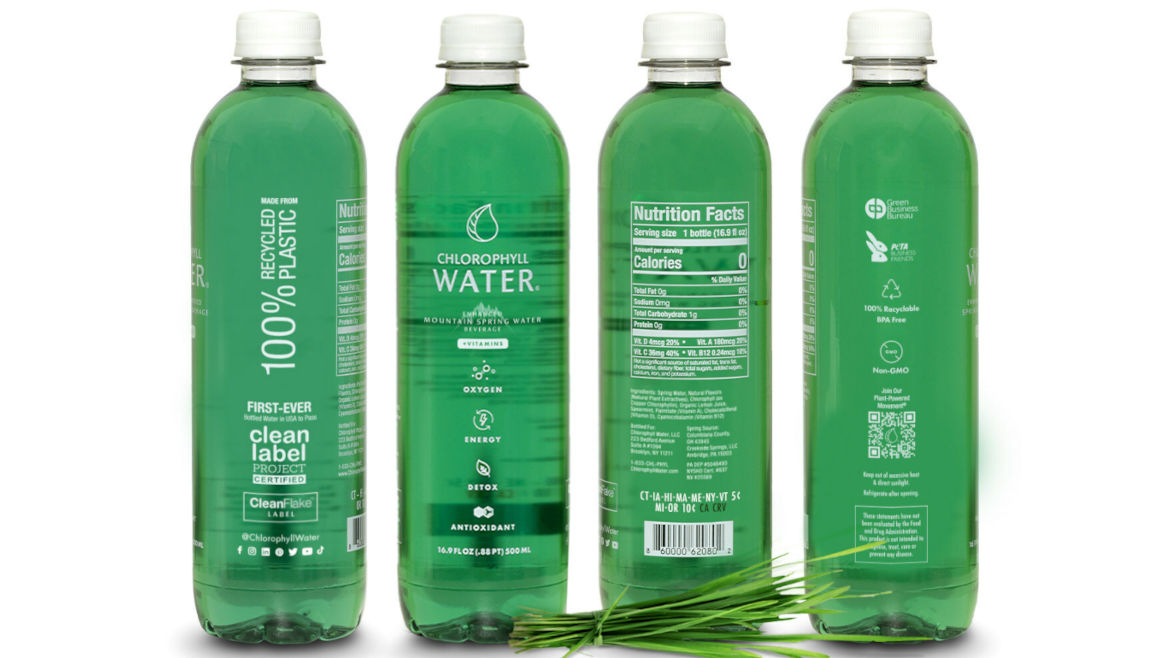
“Additionally, many brands are striving to reach 100% recyclability, which is encouraging them to design bottles that are easier to recycle,” she says. “To achieve that, brands are taking actions such as eliminating colorants or using labels made of similar materials, making bottles with labels more recyclable.”
Myers uses the example of Sprite moving on from its iconic green bottle to clear packaging.
Krishna Valluripalli, marketing director for beverage at Amcor Rigid Packaging, Ann Arbor, MI, shares that, regardless of the economy, consumers still want to buy products in sustainable packaging.
“Plastic packaging made from PET is used in over 70% of beverage containers because it’s lightweight, clear and 100% recyclable,” she says. “Compared to glass and aluminum beverage containers, PET plastic bottles create less solid waste, use less water during production and generate fewer emissions that contribute to acid rain and smog.”
Valluripalli adds that consumers are more likely to purchase beverages or foods if the company prioritizes sustainability.
Zuckerman Honickman’s Zuckerman points to rPET as creating a way for brands to address the negative views that many consumers have of plastic packaging.
“It is closing the loop on plastic waste — more and more PET bottles are collected, cleaned and processed into rPET pellets,” Zuckerman says.
He goes on to note that major brands understand that there is still strong consumer demand for plastic bottles, so they will “continue to innovate and push the envelope” in terms of their own sustainability commitments.
Similarly, Alpek Polyester’s Cullen says that brands have continued to use rPET as a key solution to their sustainability and circularity commitments.
“As a result, Alpek Polyester continues to invest in rPET capacity to meet their needs from a quality and volume standpoint,” he shares. “Our long-term experience in process and quality control gives us the tools we need to manage the variability of the recycled PET feedstock and meet the needs of brands for recycled content.”
Influencing innovations
Beyond sustainability, there are other beverage market trends affecting the use of plastic packaging.
“The rise of eCommerce, especially in the grocery industry, has driven online retailers to prioritize lightweight and durable packaging that can withstand the rigors of shipping,” Zuckerman Honickman’s Zuckerman says. “Downsizing in packaging [too]. As brands look to downsize, they look to plastic as it offers more flexibility in terms of fill size versus metal cans.”
As new types of beverages are developed and commercialized, Alpek Polyester’s Cullen suspects that plastic packaging and PET will continue to see more opportunities.
“Again, the brands understanding the consumer preference for PET, which also provides them with an economical and sustainable solution,” he says. “The cost factor is very important, and PET continues to be very attractive in terms of material and conversion costs.”
Cullen notes that other innovations are influencing the future of plastic packaging as well.
“As we move to meet the growing demand for product circularity and recycle content, we continue to look for innovation and the opportunity to meet brands demand for recycled content to fulfill consumer preferences,” he explains. “Alpek Polyester, in addition to our virgin-based Laser+ family of PET Resins, has expanded our offerings with the Laser+ rPET Resins family of products with the introduction of PET Resin with integrated post-consumer PET Resin.”
Produced using single pellet technology (SPT) on virgin assets, Cullen says they have the potential of including recycled content up to 25% at the integrated polymer level without the need for different SCU management — and with equal performance to virgin offerings.
“These offerings, in addition to our 100% Perpetual rPET, offer a menu of options for the PET circular economy,” he adds.
Zuckerman Honickman’s Zuckerman says that major PET suppliers, such as Amcor and Graham, continue to innovate and create new technology, especially pertaining to lightweight, hot-fill beverage bottles.
Graham’s Myers states that smart packaging that “will integrate technology to enhance functionality” is another innovation affecting plastic packaging.
“Smart packaging can address spoilage concerns, verify product authenticity and provide real-time information about origin and handling,” she explains.
Myers also points to trends like personalization and circular economy approaches.
“Digital printing allows beverage bottles or food containers to bear individual names or tailored promotions,” she says. “The adoption of AI (artificial intelligence) will help create personalized and interactive packaging experiences for consumers.”
In terms of circular economy approaches, Myers shares that companies are exploring materials that simplify the recycling process.
“Bio-plastics may offer a smaller carbon footprint, expanding the sources for plastic that can still be recycled,” she notes.
Additionally, Myers says that a shift to reusable and refillable containers for beverage categories, specifically water, has impacted plastic packaging.
“The shift toward sustainability encourages reusable packaging, which reduces waste and aligns with sustainability-minded consumers,” she says.
Zuckerman Honickman’s Zuckerman shares a few points as for what he believes is on the horizon for plastic packaging:
- Continued lightweighting advancements will continue to lower the environmental impact of PET bottles
- Continued focus on sustainability
- Brands will continue to choose PET for its many advantages
- Investments in recycling
Alpek Polyester’s Cullen shares similar sentiments, noting that the company views the future as “very bright” for PET and plastic packaging.
“We need to continue our efforts to bring sustainable, circular solutions to the brands, retailers and consumers,” he says. “Our success in this area will allow us to operate as a contributor to the overall good of the economy and environment.”
Looking for a reprint of this article?
From high-res PDFs to custom plaques, order your copy today!