Storage solutions aid complex SKU dynamics
Automation supports increased storage density, throughput in beverage warehouses
Richardson Adventure Farm in Illinois is home to the “World’s Largest” most intricate corn maze, thanks to its nine to 10 miles of trail that winds through 28 acres of corn featuring challenge check points along the way that visitors can locate on the provided map. Although not as entertaining as a 28-acre corn maze, beverage warehouses need their own “map” to keep track of all SKUs that have come to define storage operations.
Experts note that as SKU portfolios become more diverse, storage needs become paramount as operations contend with a fixed amount of space.
“Consumer demand for variety continues to complicate warehouse operations,” says Alyssa Keeney, solution consultant at Dematic, Atlanta. “As brands expand their product lines with new flavors, packaging sizes, inclusive options for dietary restrictions, health-conscious options, and newly appreciated ingredients such as in the functional beverages space, warehouses face space constraints and increased inventory management challenges. The need for more unique storage locations decreases density, reducing overall capacity and creating longer pick paths that drive up labor costs in manual warehouses.”
Hesham Abdelhamed, solutions consultant at DMW&H, Fairfield, N.J., explains how flexibility has become a greater need for warehouses to accommodate the shifting SKU environment.
“What I’m seeing is SKU proliferation has meant having to run a more flexible storage operation,” he says. “The tail isn’t just getting longer; it’s also picking up more of the growth. So, a lot of the velocity that used to come from one SKU is now spread across multiple SKUs because that same SKU shows up in more pack formats, for example.
“And on top of that, the SKU mix itself is changing more often, so you don’t always know what the mix is going to look like a year from now,” Abdelhamed continues. “That’s why the storage operation must be flexible enough to adapt when those changes happen.”
Dematic’s Keeney also points to the shifting of SKUs and its impact on operations.
“SKU churn, a performance metric that measures the turnover of products within a catalog, is used to indicate the volatility of the product assortment and often increases alongside SKU proliferation in the beverage industry,” she says. “The added SKUs are often replaced with similar variations or are removed during SKU rationalization efforts. High SKU churn can lead to complex inventory management and inventory levels that are difficult to manage.”
Keeney adds that these trends have led to byzantine warehouses.
“All in all, these SKU portfolio trends in the beverage space have added complexity, decreased storage density, increased mispicks and stockouts, and increased labor, making advanced inventory systems and strategic layout planning essential,” Keeney says.
DMW&H’s Abdelhamed also calls attention to intricacies that make up the web of beverage warehouses.
“From a storage operation standpoint, one of the other biggest impacts is to number of pick faces,” he says. “More SKUs don’t always mean more inventory, it means more storage locations and more pick faces, or you end up having to mix SKUs in a location.
“Once you’re mixing, you’re either digging and shuffling, which adds touches and increases the chance for mistakes to happen and just slows down the operation,” Abdelhamed continues. “More storage locations also means more travel time between locations and more stops during order fulfillment because you’re building orders from more places.”
In terms of the beverage market, Abdelhamed notes that consumers’ demand for variety has affected storage operations.
“One trend in beverage that’s been impacting storage systems is the growth in variety packs, multi-flavor packs, as well as store and club specific pack formats,” he says. “It’s the same brand showing up in more pack configurations. Operationally, that puts real pressure on inventory management and limited pick locations, and some of those packs are fast movers. This also hurts storage density. Now you need more forward pick locations, more reserve locations, more replenishment work, and more planning to keep the operation running smoothly.”
But like other consumer packaged goods (CPG) markets, beverage manufacturers also are contending with SKU rationalization.
“Beverage is moving away from the idea that more SKUs means more growth and toward only adopting the SKUs that earn their place,” Abdelhamed says. “SKU rationalization is not just cutting SKUs because there isn’t enough space. The idea is to keep the SKUs that are actually driving the business forward instead of carrying the extra weight that slows everything down and adds day-to-day complexity to the operations. This is becoming a more intentional strategy in beverage.”
Dematic’s Keeney also points to eCommerce and its effects on warehouse operations.
“The rise of eCommerce has increased demand for smaller, mixed-case orders, which require more adaptable storage and picking solutions,” she says. “It also reinforces the need to address safety risks associated with increased fork truck traffic and more frequent stops along manual picking paths.”
To address these trends and challenges, storage solutions’ providers are developing systems that can act as a map to support successful picking and delivery operations.
“To accommodate the influx of SKUs, storage systems are becoming more complex, incorporating high-density storage and solutions that address challenges caused by slow-moving inventory,” Dematic’s Keeney says. “Warehouse management systems are critical to ensure the SKUs are slotted appropriately amongst the various storage means and maintain control over inevitable SKU churn.”
DMW&H’s Abdelhamed further details how storage systems can aid warehouse needs.
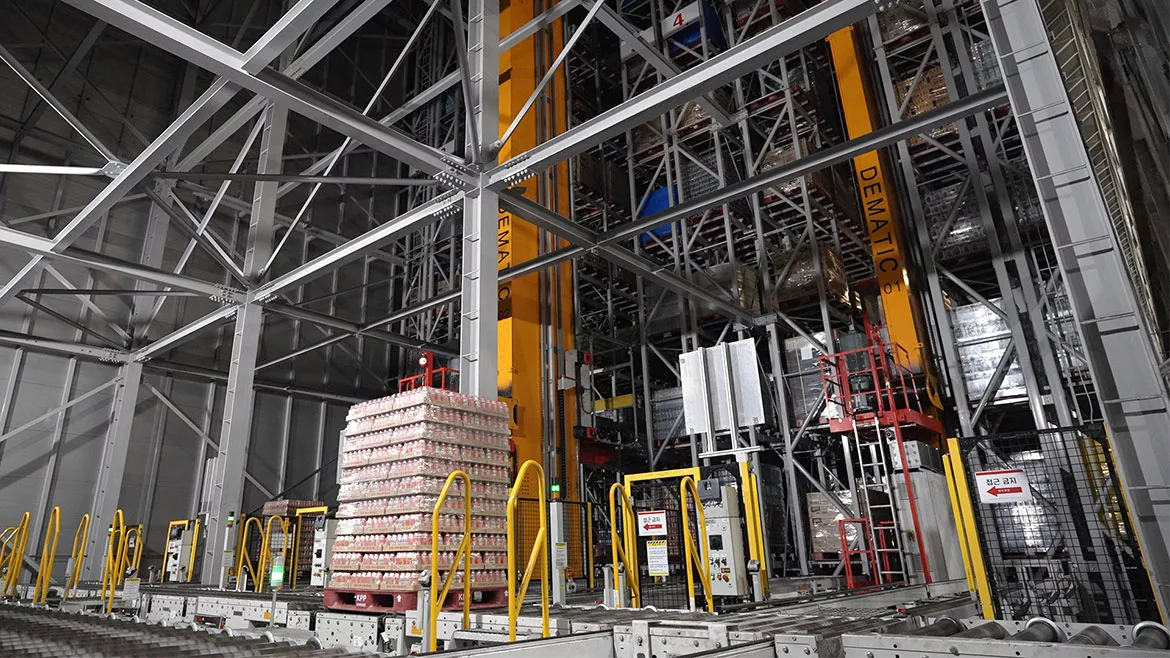
“Storage system innovations are like one part mechanical and two parts software,” Abdelhamed says. “Mechanically, higher density systems like pallet AS/RS, shuttles, or other denser storage systems let you take advantage of the vertical space while also cutting down the space you’d normally need for access and forklift aisles. Physically, that's how you avoid needing more and more building footprint to store the growth as well as the slower and medium movers.
“However, the real difference maker is the software,” he continues. “Whether it’s a manual, semi-automated, or fully automated storage system, the software is what keeps everything working together efficiently. Slotting rules and travel path optimization reduce time spent traveling between SKUs and between pick and drop locations. And things like when replenishment gets triggered, and how the workload gets balanced across different technologies, takes smart orchestration, especially when the SKU mix is changing regularly.”
Driving storage innovations
Although various beverage warehouses employ manual storage operations, the impacts of a diverse SKU set and an omnichannel market are showing operations managers that automation is an asset in today’s picking and delivery needs.
“Automated storage systems have been optimizing warehouse operations for many years, but the business case in the beverage space only strengthens with the challenges created by SKU proliferation,” Dematic’s Keeney says. “These systems improve storage density, pick accuracy, and throughput while reducing labor, decreasing turnover due to better working conditions, and enabling greater inventory control.”
DMW&H’s Abdelhamed explains that automation can serve as a driver of increased storage density and throughput.
“It lets you fit more in the same box and get more productivity with the same headcount, or sometimes even fewer people,” he says. “From a storage density standpoint, that can mean taking better advantage of vertical space and eliminating some of the space in between product you normally need for access or forklift aisles. From a throughput standpoint, that means getting to product faster. In a lot of operations, that also shows up as better responsiveness and more flexibility around order cutoff times because the automation can support that.”
Abdelhamed also notes that automated storage solutions work as the brain that keeps operations moving.
“It’s not just keeping track of where inventory sits and how much you have on hand,” he explains. “It’s proactively working in real time to decide when to replenish, how to best sequence orders and moves through the system, and how to balance bottlenecks across both people and automation. If the software is done right, you can usually squeeze more performance out of the system you already have and reduce overall costs instead of just buying more equipment and hoping that fixes the bottlenecks.”
Experts also highlight how automated systems can support safer warehouse environments.
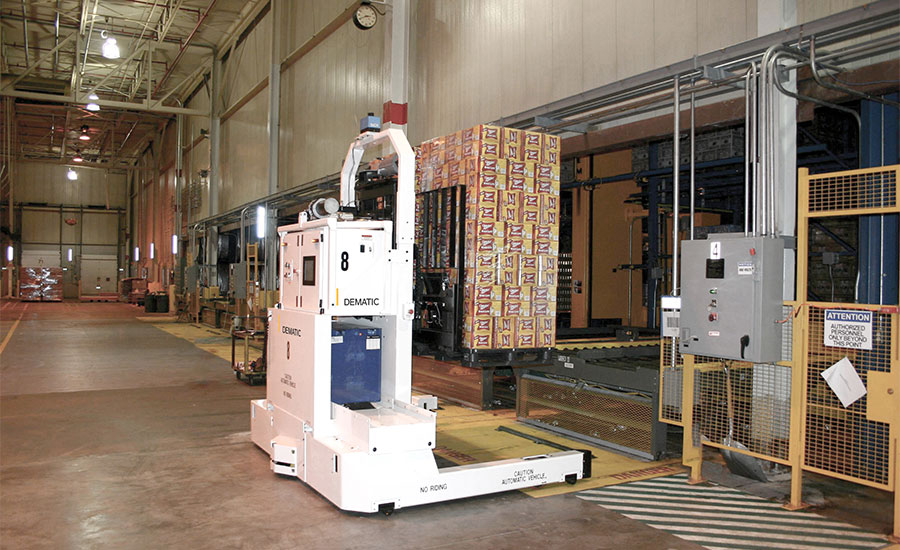
“Automated storage systems improve workplace safety by reducing manual handling, in turn minimizing injuries caused by lifting and repetitive strain,” Dematic’s Keeney says. “Goods-to-person technologies enhance ergonomics by eliminating excessive bending and reaching, while automated guided vehicles (AGVs) and autonomous mobile robotics (AMRs) are equipped with collision avoidance sensors to prevent accidents. The more manual handling that can be taken over by automation and robotics, the lower the risk of workplace strains and injuries.”
DMW&H’s Abdelhamed echoes similar sentiments.
“Automated storage systems can support a safer work environment by reducing the number of situations where pedestrians and equipment have to mix in the same busy areas,” he says. “It also reduces risky moves like accessing high storage locations where there is limited visibility, dealing with unstable loads, or trying to squeeze or move equipment into tight spaces, which is where collisions and rack damage tend to happen.”
Abdelhamed further details that automation can control warehouse workflow and how products are presented.
“When inventory is delivered to a person in an ideal ergonomic zone, you eliminate a lot of bending, reaching, and unnecessary walking,” he says. “Over time, that matters, because less repetitive strain usually means fewer injuries. And because a lot of the movement happens in controlled, closed-off, unoccupied areas, automation relies on sensors and safety devices like photo eyes and guarding that prevent entry or stop equipment when something isn’t right. That extra layer of safety control reduces human error and near-misses.”
As beverage warehouses look to create efficient, safe environments in the wake of complex SKU portfolios, Dematic’s Keeney touts the benefits of shuttle-based storage solutions.
“Looking ahead, shuttle-based automated storage and retrieval systems (AS/RS) will provide varying storage depths that can be optimized by warehouse management systems,” she says. “This ensures that SKUs are stored in the appropriate channel depth that reflect their velocity. Improvements in predictive analytics for slotting and inventory planning will also continue to work toward relieving the pressures that accompany SKU proliferation and SKU churn.”
DMW&H’s Abdelhamed anticipates that beyond flexibility, space and energy usage will influence the automated storage market.
“I think what’s on the horizon for beverage storage is a bigger push toward more flexible and automated systems that can keep up as the SKU mix keeps changing,” he says. “You’ll see more high-density storage and ASRS systems, especially in temperature-controlled operations, because automation supports denser and more energy efficient rooms. Energy is becoming a bigger driver in that decision. Better space utilization and less energy per unit moved is showing up in the business case, not just as a nice to have.”
Abdelhamed further details that return-on-investment (ROI) is improving automated storage system futures.
“The other trend I see is a shift toward more automation at the layer and case level to support mixed SKU order fulfillment as orders keep getting broader and more diverse,” Abdelhamed says. “The goal is to build more of the outbound orders automatically while still absorbing changes to the SKUs and order profile without having to throw a ton of labor at it. What used to feel like there was no ROI in this space is starting to change, especially in the long tail.
“I think we’ll see more hybrid setups initially where you automate the slice of the tail that gives you the best return, and that justification will keep expanding over time,” he continues. “Then there’s robotics like automated truck loading and unloading. It’s a backbreaking job where turnover is high, and it’s also a place where injuries happen. As the tech keeps getting better and robot costs come down, that starts to make more sense from both a safety and productivity standpoint.”
Looking for a reprint of this article?
From high-res PDFs to custom plaques, order your copy today!