Caps and closure innovations address portable beverage trends
Monomaterials, tethered caps support sustainability goals
Hollywood is keen to feature scenes where a drink is spilled, whether it be comedies like “The Big Lebowski,” rom-coms like “Notting Hill” or even animated features like in the anthology “Mickey’s Twice Upon a Christmas” in the “Donald’s Gift” short. However, as consumers embrace a more on-the-go lifestyle, spill scenes might remain in Hollywood as resealable attributes are driving caps and closures innovations.
“The demand for on-the-go beverages is significantly impacting the caps and closures market, driven by the popularity of convenient ready-to-drink options, including cold-brew coffee, functional beverages, energy drinks and bottled teas,” says Joseph Harper, director of supply chain at TricorBraun, St. Louis. “Consumers now expect portable drink options as part of their daily on-the-go routines — whether it’s a wellness drink, a caffeine boost or another type of functional beverage — and want beverages they can carry, open, reseal and continue enjoying throughout the day. As a result, brands are prioritizing features that deliver convenience and product freshness, such as easy-to-open designs, leak-proof seals and an audible click that signals a proper closure.”
Clint Rush, director of marketing and business development at Indianapolis-based Closure Systems International (CSI), echoes similar sentiments.
“As more consumers lead active, mobile lifestyles, beverage brands are prioritizing packaging that supports on-the-go convenience and functionality,” he says. “Portable formats, single-serve bottles, and resealable closures have become key differentiators for both premium and everyday beverages. Manufacturers are responding with designs that balance ease of use, safety, and sustainability.
“Today’s beverage consumers demand convenience, comfort, and functionality — whether enjoying a sports drink, enhanced water, or dairy beverage on the move,” he continues.
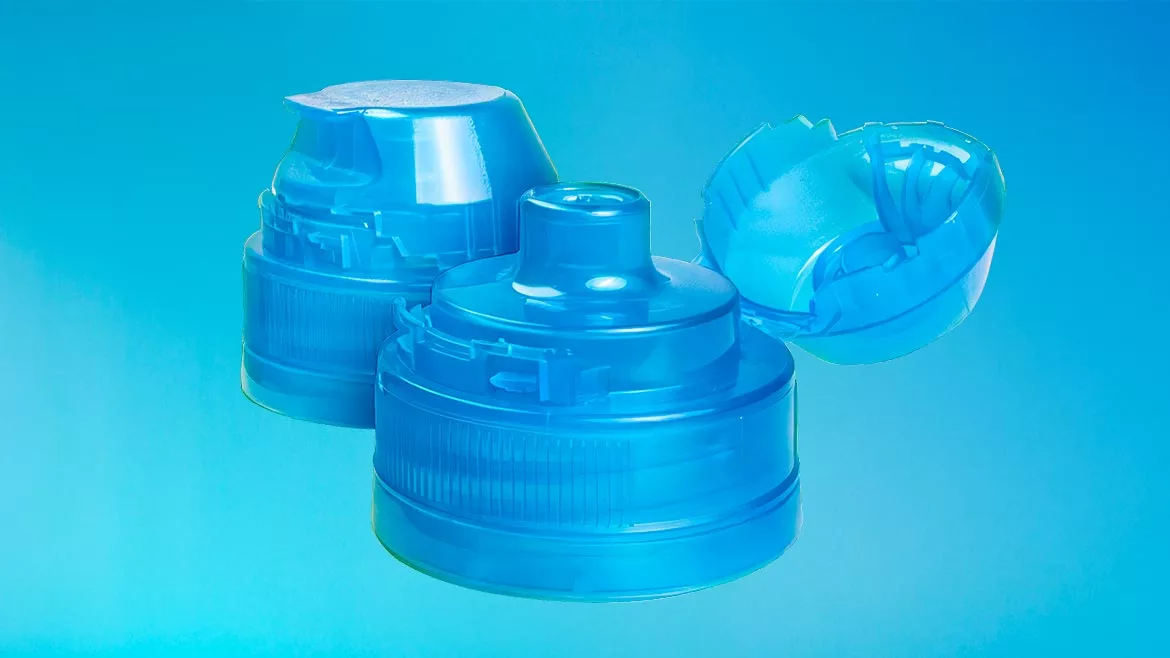
To help support this need CSI developed its new Sport Flip-Top 38mm closure, which features a “streamlined, one-hand operation that enables easy, controlled dispensing, Rush explains.
“The ergonomic flip design provides a comfortable drinking experience without separate parts, helping reduce waste and simplify use,” he says. “Designed for active lifestyles and portable consumption, the closure maintains a secure seal when closed while being intuitive and satisfying to open, drink from and re-close. Its integrated hinge ensures that the cap stays with the bottle, supporting recyclability and convenience for consumers and bottlers alike.”
This all comes as SKU proliferation is having an impact on filling and sealing operations for beverage manufacturing.
“Today’s beverage shelves are more crowded than ever, with product lines expanding across flavors, formats and functional benefits,” Rush explains. “This explosion of SKUs challenges bottlers to stay agile while maintaining efficiency and quality. Flexible packaging systems — including modular closures and adaptable capping solutions — have become essential to keeping production lines running smoothly.”
Rush notes that today’s grocery shelves feature neck finishes ranging from 18 mm to 133 mm as well as hundreds of color options, custom textures, brand-specific knurl patterns, and under-the-cap (UTC) promotions.
He adds that CSI offers both standard and customized designs across all filling platforms as well as application expertise to help bottlers minimize downtime that accompanies frequent changeovers.

Joseph Harper, director of supply chain at TricorBraun, also details the complexity related to SKU proliferation within beverage operations.
“SKU proliferation creates more opportunities for distribution and consumer engagement as brands introduce more flavors, colors, limited-edition formats, and exclusive promotional packaging,” he says. “At the same time, it also introduces added tooling complexity, changeover downtime, and inventory challenges.”
Harper calls attention to TricorBraun’s ability to manage fast-turnover production environments, which can help brands navigate complexities to get products to market quickly.
Growing interest
Although the caps and closures market has seen significant influence from SKU proliferation trends as well as on-the-go lifestyles, the market continues to monitor ways to support manufacturers’ sustainability goals.
“Sustainability continues to be a major force shaping innovation in the caps and closures market,” says Samantha Juna, insights and enablement director at TricorBraun. “One area we’re seeing growing interest in is monomaterial solutions, which are optimized for recyclability. Another is lightweighting — designing closures that use the least amount of plastic possible without sacrificing structural integrity or functionality, whether on the shelf or during use.”
Harper expects this interest will continue. “Recent advancements have focused on improving production efficiency and supporting sustainability,” he says. “Monomaterial designs are increasingly used to optimize downstream recycling, and tethered caps are helping brands reduce waste while meeting evolving regulatory requirements.”
Juna also points to the potential for tethered caps in the United States.
“There is growing interest in tethered caps, which are attached to the bottle and help with recycling and waste reduction,” she says. “Already mandated in the EU, similar regulations are being considered in U.S. states such as California and Illinois. For brands, tethered caps demonstrate a commitment to sustainability.”
CSI’s Rush notes that sustainability has been influencing packaging innovation as governments, consumers and brand owners demand reductions in material use and carbon impact.
“Lightweighting, recyclability, and circular materials are now central to design strategies across the caps and closures sector,” he says. “Companies are moving beyond resin reduction to embrace closed-loop systems that turn used packaging into high-quality new products.”
Given this, Rush explains that sustainability remains at the forefront of CSI’s innovation strategy.
“The company continues to focus on source reduction, producing lighter-weight, shorter closures that reduce material use and carbon footprint while improving logistics efficiency — more caps per truck, lower transportation impact, and reduced overall cost,” he says. “CSI is also a leader in utilizing sustainable materials, highlighted by its incorporation of PolyCycle PCR into their closure designs. PolyCycle resin is an FDA-approved post-consumer recycled (PCR) material engineered for food- and beverage-grade applications. Closures made with PolyCycle offer best-in-class performance and recyclability.”
Rush further notes CSI’s plastic reduction transitions from 28mm standard-height to short-height and now to 26mm ultra-short closures, but still maintain capping and sealing performance as well as growing interest in tethered closures.
“[I]n line with new global regulations, CSI’s Twist & Flip tethered closure represents the next evolution of consumer-friendly, sustainable design,” he says. “It offers a drop-in replacement that remains attached to the bottle throughout its lifecycle, ensuring recyclability compliance while enhancing ease of use. The closure’s hinged operation allows consumers to open, drink, and re-seal — a reflection of CSI’s ongoing commitment to safety, convenience, and environmental stewardship.”
In addition to sustainability, Rush notes that the biggest influences on the horizon for the caps and closures will be wellness, innovation, and differentiation.
“An aging global population — now the fastest-growing demographic — brings heightened needs for safety, usability and accessible packaging,” Rush says. “At the same time, a significant portion of the world population is under 25, representing a hyper-connected, values-driven generation that expects authentic brands, instant access to information, seamless digital engagement, and demonstrable environmental responsibility. Younger consumers, children included, influence household purchasing and expect packaging that supports active, on-the-go lifestyles.
“Meanwhile, emerging markets continue to experience middle-class expansion and premiumization, while developed markets face ongoing economic pressures that reinforce the need for value-driven innovation,” he continues. “Within this context, the caps and closures sector is shaped not only by consumer preference but also by the operational priorities of bottlers and brand owners.”
Looking for a reprint of this article?
From high-res PDFs to custom plaques, order your copy today!