Efficiency drives labeling equipment
Beverage-makers seek machinery that supports diverse portfolios
Often during wedding receptions, the DJ will take song requests to get the party started and keep the guests on the dance floor. While some guests might prefer pop songs, others may opt for classic songs depending on the vibe they’d like to bring to the dance floor.
In the beverage sector, requests for labeling equipment can vary based on specific brand needs.
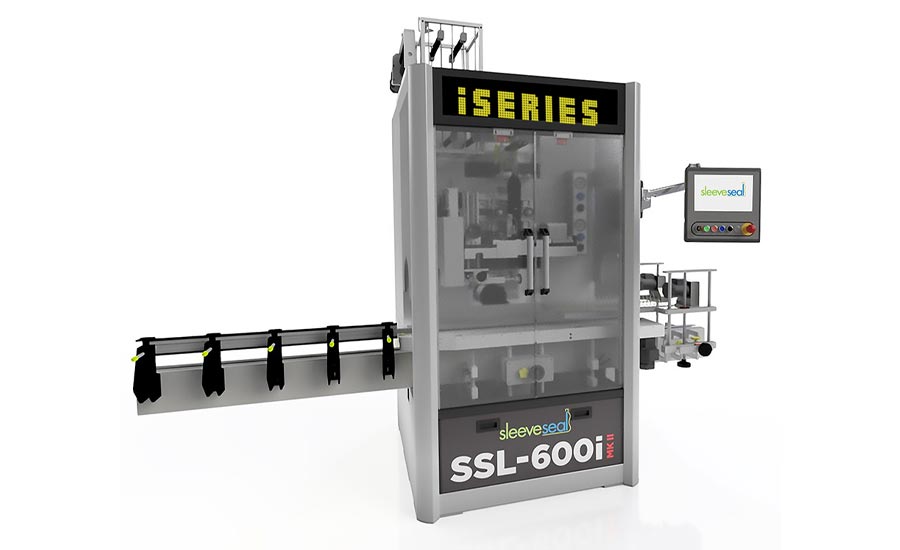
Justin Slarks, director of marketing at Sleeve Seal, Little Rock, Ark., describes some of the biggest requests the company receives when it comes to labeling equipment.
“Larger manufacturers are looking for maximum efficiencies with minimal down time, so we have been busy installing systems that have mirrored machines or machines with dual application heads,” he says. “This allows a facility to run each machine, or head, at half speed and shut down a machine, or machine head, for repairs or changeovers with no down time — simply divert application to the other machine, or head, and keep production running at normal line speeds.”
Slarks notes that smaller manufacturers also are concerned with efficiencies, but also are interested in quick, easy changeovers that we can offer without the need for tools.
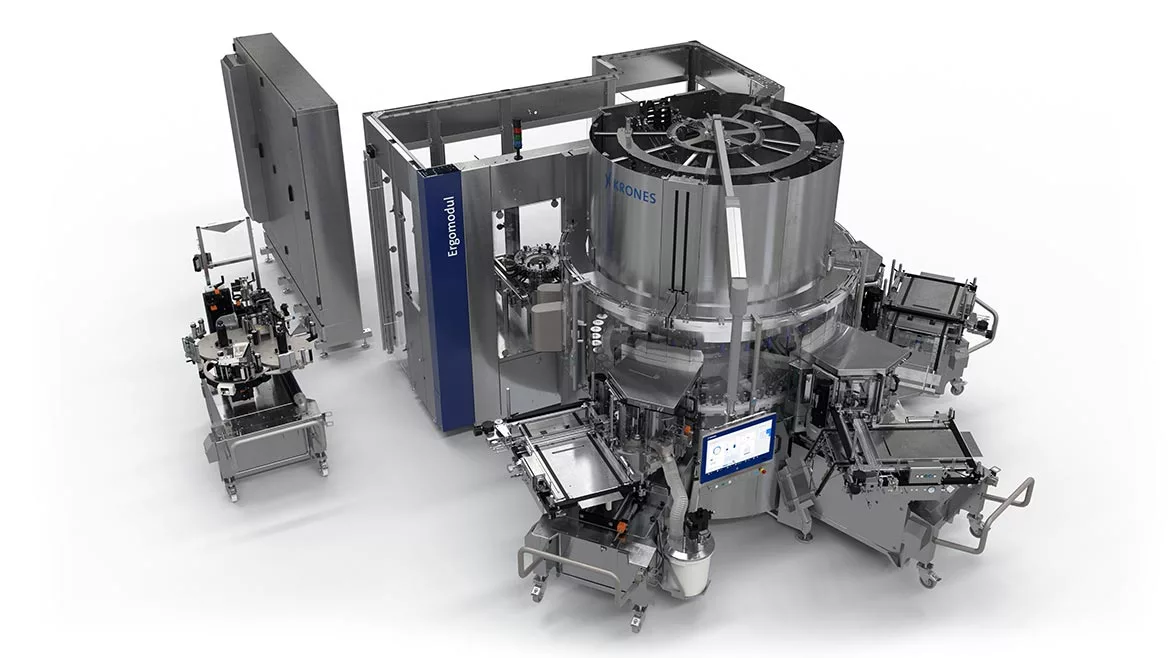
Mike Soloway, director of labeling technology at the Franklin, Wis.-based Krones Inc. shares that flexibility and modularity are common requests for new labelers.
“As label materials and adhesives continue to evolve, our customers need to know that our labelers will be able to adapt to those changes,” he says. “For example, several of our customers have indicated that they may want to switch from their current cold glue labeling to pressure sensitive labeling at some point in the future. The modularity of our Ergomodul modular labeler would allow them to easily swap between cold-glue and pressure sensitive labeling stations as needed while that transition is taking place.”
There are trends in beverage labeling materials that are impacting labeling equipment.
“Down-gauging of labeling materials produces the most challenging issues for labeling equipment,” Soloway says. “For example, down-gauging shrink sleeve materials makes them less rigid, which makes them more difficult to apply to a container. In most cases, we can successfully apply those thinner sleeves, but there is a trade-off in terms of throughput capabilities and line efficiency.”
Other sustainability trends Soloway notes include recycled, renewable and compostable materials have little or no effect on our labeling processes and have been shown to perform well on Krones’ labelers.
Sleeve Seal’s Slarks says high performance shrink label substrates that can shrink to more curvy containers have been in demand.
“These require shrink systems that are more tunable with repeatable performance,” he adds.
Packaging size trends also have influenced labeling equipment.
Slarks says that extra-large and bulk formats have become more popular, so machines have followed the trend to a certain degree.
“There are some built-in limits with shrink labeling, so we are still seeing roll-fed application for really large formats,” he states. “These limits include the ability to project, or throw, a shrink label with a very large layflat dimension and the rigidity of large containers.”
Today, Slarks notes that shrink label substrates often are so dynamic that they can deform less rigid containers when they shrink.
Meanwhile, Krones’ Soloway says container sizes only become problematic when they are either too small to travel on a conveyor without falling over or too large to fit in an existing machine that was not designed for that container size.
“What impacts equipment more than size is the shape of the container,” he shares. “Most labels require straight sides since they cannot be applied to compound curves without some degree of wrinkling or bubbling. Shrink sleeves overcome the need for straight sides, but they can present challenges of their own.”
Shrink sleeve materials can only shrink up to a certain percentage, Soloway describes, so container designs must take that into account. Also, he notes that shrink sleeves cannot shrink into recessed areas such as pinch grips.
“Lastly, containers with flat tops such as beverage cans are more challenging because the sleeve can hit the top of the can and bounce off as it is being applied, whereas a bottle with a gradual, sloping neck is more forgiving and can run through the sleever at a faster rate,” he explains.
Sustainable packaging material trends within the beverage industry also are impacting the future of labeling equipment.
Sleeve Seal’s Slarks says that rPET entered the market recently, but there aren’t many suppliers so the cost is high compared with PET. Overall, he notes that not much has changed in recent years.
“Naturally, the demand will produce more producers,” Slarks notes. “It’s common to see label material production follow the trends and improvements of containers.”
Meanwhile, Krones’ Soloway says that the company’s newer innovations revolve around the recycling process.
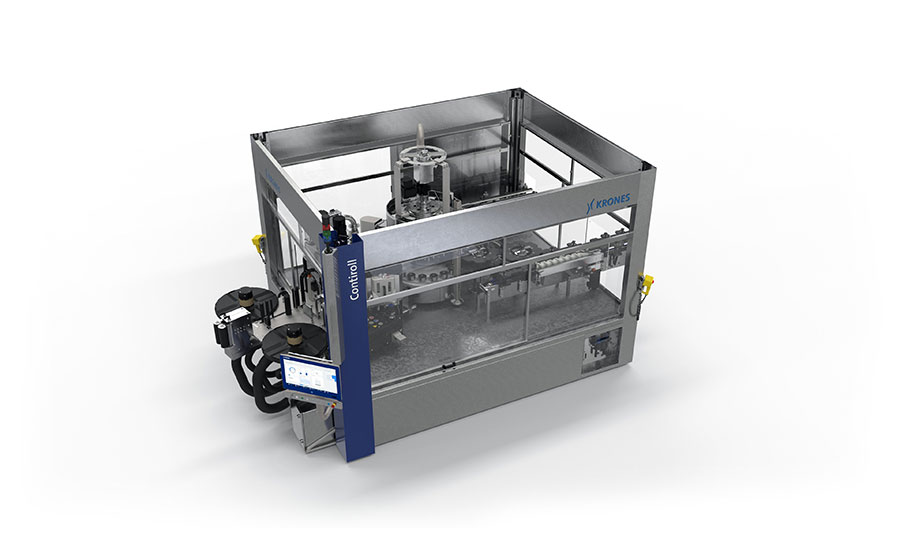
“There are some things we can do from a machine standpoint to help the recycling process,” he states. “For example, our Contiroll continuous roll-fed labeler applies the adhesive in a pattern that helps it to separate more easily from the container during the recycling process.”
The experts share their predictions for labeling equipment evolutions.
“I think that machinery manufacturers will continue to push easier to operate equipment that will enable facilities to maintain high efficiencies,” Sleeve Seal’s Slarks says. “We have been engineering machines that take the operator input out of the equation and automate the axial adjustments, which are critical to repeatable performance and efficiency.”
Krones’ Soloway anticipates innovations in label-less container decoration to become more popular in the future.
“Better communication within machines to provide real-time diagnostics and error correction will advance,” he says. “Development of faster, more error-free changeover systems are always on the drawing board.”
Looking for a reprint of this article?
From high-res PDFs to custom plaques, order your copy today!