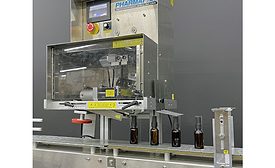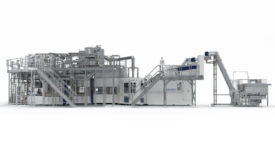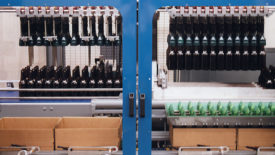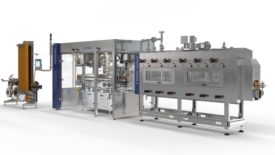
Years ago, the word “flexibility” carried a different meaning in the filling systems space — it might have referred to different packaging formats and beverage categories. Today, proliferation of SKUs and the increasing number of particle-filled beverages have stretched the word’s definition in the beverage industry.
ProMat 2013, which took place Jan. 21-24 at McCormick Place in Chicago, gave attendees an inside look at some of the newest supply chain solutions provided by material handling and logistics equipment manufacturers.
Whether it’s the growth of the wine, spirits and craft beer markets or the popularity of natural beverages, glass packaging manufacturers note that these trends are having a positive effect on this primary packaging material.
For beverage containers on the shelf, standing out tends to be the name of the game. To create a differentiated shelf presence, beverage packages often flaunt different shapes, materials and styles.
As the beverage industry continues to see increases in packaging shapes and sizes as well as sustainable offerings, it’s clear that beverage-makers aren’t lagging in the innovation department.
Despite the threat from Hurricane Sandy, Pack Expo International 2012, hosted by the Packaging Machinery Manufacturers Institute (PMMI), topped 2010 numbers.
Novelist Dan Brown has seen his protagonist Robert Langdon decipher his fair share of codes and symbols in his best-selling novels, but for consumer packaged goods (CPG) companies, it’s all about clear, concise codes instead of ones that contain hidden secrets.
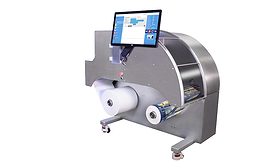
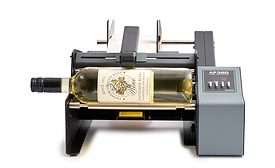
According to a recent report by the Packaging Machinery Manufacturers Institute (PMMI), the market for labels is increasing year-over-year by as much as 5.2 percent.
Bulk, portion-control, lightweight, flexible and additional packaging innovations have placed a strain on production equipment such as palletizers.
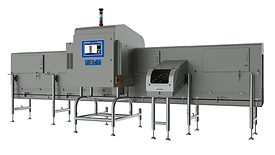
On the production line, beverage packages face multiple obstacles, such as chipped or broken glass, deformed plastic, mis-seamed cans, over- or under-filling, incorrect labeling, leaking, contamination, and misapplied caps and closures, to name a few defects.
AVAILABLE ON DEMAND SQF 2000, FSMA, ISO 22000/PAS220 and other standards continue to gain traction in an attempt to create safer foods and beverages.
The June 2013 Beverage Industry includes a cover story on Tenth and Blake Beer Co., as well as articles about MillerCoors and the Top 100 beverage companies of 2012. Check it out today!
Are you an Insider? Subscribe to Beverage Industry’s weekly e-newsletter to receive news headlines, new product information and magazine highlights.
This book addresses the principles of cleaning operations, water supply issues and the science of detergents and disinfectants.