In January 2016, the U.S. Department of Agriculture (USDA) and Health and Human Services (HHS) released the 2015-2020 Dietary Guidelines. The eighth edition of this report highlighted the importance of following a healthy eating plan that includes a variety of nutrient-dense foods as well as limiting calories from components such as added sugars, saturated fats and reducing sodium intake.
As today’s consumers spend their dollars across more channels and store formats, retailers are facing increased competition for dollar share, experts note. Despite this fact, the overall discount retail channel performed “quite well” last year as dollar stores drove growth of nearly 7 percent, notes Jon Hauptman, senior director of retail at Long Grove, Ill.-based Willard Bishop Co., an Inmar analytics company.
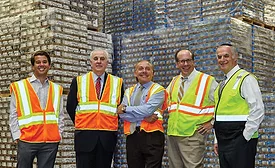
Originally operating out of a 4,000-square-foot warehouse and running a fleet of three delivery trucks, Bronx, N.Y.-based Manhattan Beer Distributors has become one of the largest beer distributors in the United States.
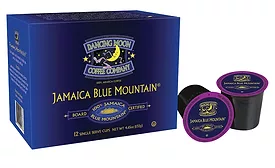
Americans continue to show their affinity for coffee; but when they opt for this beverage, they are taking a more premium stance. “The coffee production industry exhibited growth over the past five years, propelled by an increasing number of consumers purchasing high-cost gourmet coffee,” IBISWorld states in its report “Coffee Production in the US,” which was released in January.
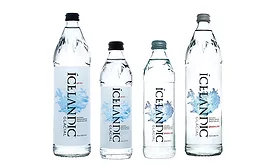
Since starting his first bottled water company in Hawaii in 1980, and subsequently launching more than 50 bottled water plants in seven countries, Steven Nickolas has had a longtime fascination with the hydrating benefits of water.
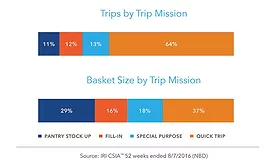
Forty-four percent of consumers are visiting convenience (C-stores) stores more often — and half say they are visiting significantly more often than they did just two years ago, according to Chicago-based Datassential, which surveyed 1,000 consumers and 150 operators for its June “C-Store Keynote Report.” While visiting C-stores, these consumers also are buying more prepared food and beverages, the report notes.
As the number of label-reading consumers grows exponentially, beverage-makers that are looking to appeal to these consumers are launching botanical-based beverages in increasing numbers across various categories.
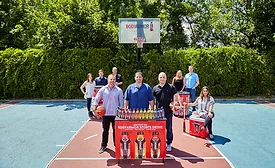
Just as his 3-year-old thoroughbred Outwork thundered down the race track at the Kentucky Derby earlier this year, BODYARMOR Co-Founder and Chairman Mike Repole is in his own race as he aims to beat the competition in the $11.2 billion global sports drinks market.
The well-known philosopher Aristotle once said “The energy of the mind is the essence of life.” In today’s everyday life, the energy drinks market might be the new essence of the life as the category — in connection with an uptick in energy shots’ sales — now is the No. 2 performer, second only to bottled water, in convenience stores, according to market research analysts.
The term “information superhighway” might have first gained traction in the 1990s in reference to the Internet and other forms of digital communications, but the prominence of digital in Americans’ day-to-day lives has taken this “superhighway” to another level.
 RSS
RSS